Custom alloy machining sits at the intersection of material science and manufacturing precision. For OEM buyers and engineers sourcing components for corrosive, high-temperature, or wear-critical environments, the choice of alloy and the way it is machined can determine whether a part survives its service life or fails prematurely. Unlike machining aluminum or mild steel, working with special alloys introduces tighter process windows, faster tool wear, and higher stakes at every stage—from drawing review to final inspection.
This article examines the practical realities of custom alloy machining: which alloys are commonly specified, how they behave under the cutting tool, what design features demand extra attention, and how buyers can evaluate whether a supplier is genuinely equipped for the work. The goal is not to turn every reader into a machinist, but to provide the technical context needed to ask better questions, prepare clearer RFQs, and avoid costly misunderstandings between design intent and manufacturing reality.
What Is Custom Alloy Machining?
Custom alloy machining refers to the production of metal components from specified alloy grades, fabricated to a customer’s drawing, material specification, and acceptance criteria. The “custom” element operates on two levels: the material is often selected for a specific combination of corrosion resistance, high-temperature strength, or wear performance rather than chosen from a catalog of standard stock; and the geometry, tolerances, and inspection requirements are defined by the application rather than by a generic product standard.
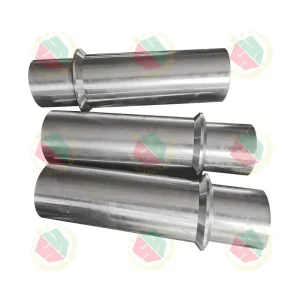
This distinguishes custom alloy machining from general CNC job work in several practical ways. The material itself may arrive as forged billet, cast stock, or plate rather than standard bar stock, requiring different fixturing and roughing strategies. Cutting parameters must be developed around the alloy’s work-hardening tendency, thermal conductivity, and hot hardness rather than borrowed from a generic steel or aluminum program. And because special alloys often carry significantly higher material costs and longer lead times, the margin for scrap is narrower—a single machining error on a nickel-based forging can represent a substantial loss before the first finishing pass even begins.
Custom alloy machining is typically specified when a part must perform in conditions that rule out common materials: chemical processing equipment exposed to aggressive media, oil and gas components requiring resistance to sour service, high-temperature fasteners and valve trim, and wear parts that cannot be lubricated. In these cases, the alloy selection and the machining process are not independent decisions—they must be developed together.
Common Alloy Materials for Custom Machining
The alloys most frequently encountered in custom machining requests fall into several families, each with distinct machining characteristics that shape how a part should be designed and quoted.
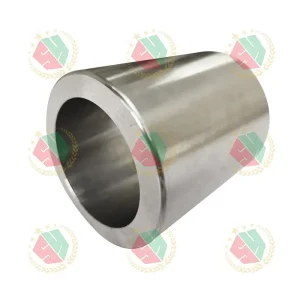
Stainless steels and corrosion-resistant alloys cover a broad spectrum from relatively machinable free-machining grades to high-alloy austenitic and duplex grades that work-harden aggressively. Alloy 28 (UNS N08028), for example, is specified for severe corrosive environments including wet phosphoric acid and sour gas wells, but its high nickel and chromium content produces high toughness and a tendency toward chip breaking and built-up edge during turning. Grades like 316L and 17-4 PH are more commonly available but still require attention to work-hardening during drilling and tapping.
Nickel-based alloys such as Inconel 625 and 718 are specified for high-temperature strength and corrosion resistance in oil and gas, aerospace, and chemical processing. Inconel 718 in particular is known for retaining strength at elevated temperatures, which translates directly into high cutting forces and rapid tool wear during machining. These alloys are also prone to severe work-hardening, meaning that a light finishing pass that rubs rather than cuts can leave a hardened surface layer that damages the next tool.
Cobalt-based alloys, commonly represented by Stellite grades, are selected for wear resistance in valve trim, bushings, and inserts where galling and abrasive wear are concerns. Stellite 6, for instance, is known for maintaining hardness at elevated temperatures and resisting dry friction, but its wear-resistant properties make it correspondingly difficult to machine with conventional tooling.
Titanium alloys offer high strength-to-weight ratios and corrosion resistance, particularly in aerospace and medical applications. Their low thermal conductivity causes cutting heat to concentrate at the tool edge rather than dissipate into the chip, accelerating tool wear and making thermal management a central machining concern.
Copper alloys and specialty bronzes appear in applications requiring electrical conductivity, bearing properties, or seawater resistance. While generally more machinable than nickel or cobalt alloys, they can present their own challenges with gummy chips and surface finish control.
The critical point for buyers is that “alloy” is not a single category. A supplier who machines 304 stainless steel competently may have no experience with the work-hardening behavior of Inconel 718, and a shop that turns Monel 400 regularly may still need to develop a new process for a Stellite bushing. Material specifications should be stated explicitly on the drawing, with the applicable standard (ASTM, UNS, EN, or equivalent) identified, and suppliers should be asked directly whether they have prior experience with that specific grade or its close family.
Main Processes Used in Custom Alloy Machining
The machining of custom alloy parts typically combines several processes, sequenced to balance material removal efficiency against dimensional accuracy and surface integrity.
CNC turning handles cylindrical features—shafts, bushings, flanges, and valve bodies—and is often the first operation for parts that begin as forged or cast stock. For heat-resistant alloys, rough turning removes the bulk of material while the workpiece is still in a softer condition, before any intermediate heat treatment that may be specified.
CNC milling produces complex contours, pockets, slots, and bolt patterns. In nickel-based alloys, milling operations must account for the material’s tendency to work-harden; cutter paths that allow the tool to rub rather than engage cleanly can accelerate wear and damage the subsurface. High-pressure coolant delivery and tool geometries designed for shearing rather than ploughing are common strategies.
Multi-axis machining and turn-mill reduce the number of setups required for parts with features on multiple faces. For custom alloy components, minimizing re-fixturing is not merely a productivity concern—each additional setup introduces potential tolerance stack-up and handling risk on an expensive workpiece.
Hole-making operations—drilling, reaming, boring, and tapping—deserve particular attention in special alloys. Threading Inconel or Monel fasteners, for instance, is notoriously difficult due to work-hardening and galling risk. Best practice often involves machining threads in the solution-annealed condition before age hardening, using sharp PVD-coated inserts with positive rake geometry, and preferring thread rolling over cutting where the application allows.
Electrical discharge machining (EDM) and wire EDM are sometimes used in industry for features that are difficult or impossible to produce with rotating tools in hard or work-hardening alloys. This is a general process consideration rather than a statement of any particular supplier’s equipment. EDM also introduces its own surface integrity considerations, including a recast layer that may require removal in critical applications.
The process sequence itself is a design decision. A typical route for a precision alloy component might be: rough machining → stress relief or intermediate heat treatment → semi-finishing → final heat treatment → finishing → inspection. The placement of heat treatment is critical, because the hardness and dimensional stability of the part change at each stage.
Machining Challenges with Special Alloys
The difficulties of machining special alloys are well documented in the technical literature, but their practical implications for a buyer are often underappreciated. The same properties that make an alloy desirable in service—high strength at temperature, corrosion resistance, wear resistance—are precisely what make it difficult to cut.
Tool wear is the most immediate challenge. Nickel-based and cobalt-based alloys contain hard carbides and retain strength at cutting temperatures, causing abrasive and adhesive wear on cutting tools. In a production setting, this translates into shorter tool life, more frequent tool changes, and a greater risk of a worn tool damaging the final pass.
Work-hardening occurs when the cutting tool rubs against the surface rather than cutting cleanly beneath it. Austenitic stainless steels, nickel alloys, and cobalt alloys are all susceptible. The practical consequence is that a “light cleanup cut” can actually harden the surface and make subsequent machining more difficult. Machinists address this by maintaining adequate feed and depth of cut to get under the hardened layer, and by using sharp, positive-rake tooling.
Heat concentration is exacerbated by the low thermal conductivity of many special alloys. Titanium and nickel alloys do not conduct heat away from the cutting zone efficiently, so the tool edge absorbs the majority of the generated heat. This accelerates diffusion and oxidation wear and can lead to thermal cracking of carbide inserts. High-pressure coolant, appropriate coating selection, and conservative surface speeds are standard countermeasures.
Chip control becomes more difficult as alloys become tougher and more ductile. Long, stringy chips in nickel alloys can tangle around the tool and workpiece, causing poor surface finish and potential tool breakage. Insert geometries with chip breakers designed for the specific alloy and cutting condition are essential.
Distortion and residual stress are particularly relevant for thin-walled or asymmetric parts. The material removal process itself redistributes internal stresses, and if these are not managed through appropriate roughing allowances, stress-relief steps, and finishing strategies, the part may move after final machining and fail dimensional inspection.
For buyers, the practical takeaway is that quotation lead times and prices for special alloy parts reflect these realities. A quote that appears unusually low may indicate that the supplier has not fully accounted for the tooling and process development the job requires.
Part Design Considerations for Custom Alloy Machining
Design decisions made at the drawing stage have a disproportionate effect on the cost and feasibility of custom alloy machining. While a machinist can often find a way to produce a challenging feature, the most cost-effective approach is to design for the material’s behavior from the start.
Specify the material completely. The drawing should state the alloy grade, the applicable standard (for example, UNS N07718 or ASTM B637 for Inconel 718), the heat-treatment condition, and any material certification requirements. An ambiguous material callout invites substitution or confusion that may not surface until the part is in service. For alloys with multiple conditions—annealed versus aged, for instance—the specified condition should match the machining sequence, since hardness varies significantly between them.
Review tolerances against material capability. Special alloys are more sensitive to machining-induced distortion and residual stress than common materials. Specifying a tight tolerance on a thin wall or a long, slender feature in Inconel may be technically achievable but disproportionately expensive. Tolerances should reflect functional requirements, not drafting convention.
Consider wall thickness and feature proportions. Thin walls deflect under cutting forces, and in work-hardening alloys, a deflecting wall can produce chatter and a hardened surface that is difficult to finish. Deep pockets and narrow slots in nickel or cobalt alloys require long, slender tools that are prone to deflection and breakage. If the design permits, increasing corner radii, avoiding deep narrow slots, and maintaining more uniform wall sections will improve machinability.
Plan for fixturing and workholding. Complex alloy parts often lack convenient clamping surfaces, particularly when the final geometry is thin or irregular. Design features that provide stable clamping and clear datum references can reduce setup complexity and improve dimensional consistency.
Define surface integrity requirements explicitly. For critical applications—particularly in aerospace and oil and gas—the drawing should specify whether machining-induced surface features such as white layers, microcracks, or excessive residual stress are unacceptable. If the part will be inspected for these conditions, the supplier needs to know before quoting.
Provide a complete data package. A 3D model alone is rarely sufficient for custom alloy parts. The 2D drawing should carry material specifications, general tolerances, surface finish requirements, critical-to-quality characteristics, and any special inspection or documentation requirements. A clear data package reduces the likelihood of clarification delays and ensures that quotes are based on the same scope.
Quality Control and Inspection in Custom Alloy Machining
Quality control for custom alloy parts extends beyond dimensional inspection. The material itself must be verified, the process must be controlled, and the final part must meet both the drawing and any specified acceptance standards.
Incoming material verification is the first checkpoint. Suppliers should provide material certificates traceable to the heat or lot, and where required, perform independent verification such as spectroscopic analysis to confirm alloy composition. A shop that machines special alloys should have a documented procedure for checking incoming material against the specified grade, particularly when the material is supplied by the customer or sourced from a distributor without full traceability.
In-process inspection during machining catches problems before they become scrap. For first articles, a first-article inspection (FAI) report documenting actual measurements against every drawing characteristic is standard practice. For production runs, in-process checks on critical dimensions, coupled with tool-life monitoring, help maintain consistency.
Final inspection should match the requirements stated on the drawing. For custom alloy parts, this may include dimensional inspection with calibrated instruments or a coordinate measuring machine (CMM), visual inspection for surface defects, surface roughness measurement, and where specified, non-destructive testing such as dye penetrant or ultrasonic inspection.
Documentation is a frequently underestimated part of quality control. Material certificates, inspection reports, heat-treatment records, and certification of conformance should be available for each lot. For regulated industries, additional documentation such as first-article inspection reports and process qualification records may be required.
Buyers evaluating a supplier’s quality capability should ask specific questions: What instruments are used for final inspection? How is material traceability maintained? What is the procedure when a nonconformance is found? A supplier who can answer these questions with reference to documented procedures is more likely to deliver consistent results than one who answers only in general terms.
How to Choose a Custom Alloy Machining Supplier
Selecting a supplier for custom alloy machining involves assessing capabilities that go beyond a generic CNC shop’s equipment list. The following factors are worth investigating before placing a first order.
Demonstrated experience with the specific alloy family. General CNC experience is not the same as experience with nickel-based or cobalt-based alloys. Ask for examples of parts machined from the grade specified on your drawing, or from a close metallurgical relative. A supplier who has machined Inconel 718 will have a starting point for Inconel 625; one who has only worked with stainless steel will not.
Process development capability. Special alloy machining often requires developing cutting parameters, tooling selections, and fixturing approaches for a new job. A supplier should be able to describe how they approach a new alloy or a challenging feature—whether they run test cuts, consult tooling supplier recommendations, or rely on documented parameters from prior work.
Equipment and tooling appropriate to the material. High-pressure coolant delivery, rigid machine tools, and tooling designed for heat-resistant alloys are not universal. A shop that primarily machines aluminum may have machines and coolant systems that are marginal for nickel alloys.
Inspection and documentation practices. As discussed above, the ability to verify material, inspect critical dimensions, and provide traceable documentation is essential for custom alloy work.
Communication during quoting. A supplier who asks clarifying questions about material condition, critical features, or inspection requirements during the quoting process is more likely to identify manufacturing risks before they become problems. A quote that arrives without any questions may indicate that the drawing was not reviewed in detail.
Realistic lead times. Custom alloy machining involves longer cycle times than common materials, and material procurement for special grades can add weeks. A supplier who quotes a lead time comparable to aluminum parts should be asked to explain their basis.
When preparing an RFQ for custom alloy machining, include the full drawing and data package, the material specification with standard and condition, quantity and delivery requirements, inspection and documentation requirements, and any known manufacturing constraints. The more complete the information, the more accurate and comparable the quotes will be.
Typical Industrial Applications of Custom Alloy Machined Parts
The applications below illustrate where custom alloy machined components are commonly specified. They describe industry practice in general terms and are not intended as a statement of any particular supplier’s customer list or sector experience.
Oil and gas components include valve bodies, stems, seats, fasteners, and bushings exposed to sour service, high pressures, and corrosive media. Alloys such as Inconel 625 and 718 are common for high-pressure, high-temperature wellhead and valve applications, while Monel 400 is specified for seawater and low-temperature corrosive service. Machining challenges include thread galling, work-hardening during drilling, and maintaining dimensional stability in parts with thin sections.
Chemical processing equipment relies on corrosion-resistant alloys for pumps, valves, reactors, and heat exchangers. Alloy 28 and similar high-nickel stainless grades are specified for severe environments including wet phosphoric acid and chloride-containing media. The machining focus is on achieving surface finishes that resist localized corrosion and maintaining tolerances on sealing surfaces.
Power generation and energy applications use heat-resistant alloys for turbine components, boiler fittings, and high-temperature fasteners. Nickel-based alloys maintain strength at operating temperatures that would soften common steels, but their machining requires careful thermal management and tooling selection.
Industrial machinery and wear parts specify cobalt alloys and other wear-resistant materials for bushings, inserts, and guides where lubrication is impossible or where abrasive wear is severe. Stellite components are common in valve trim and pump wear rings.
Aerospace and defense applications, while subject to additional qualification requirements, use custom alloy machining for structural and engine-adjacent components. Titanium and nickel alloys are prevalent, and the machining requirements typically include tight tolerances, documented process controls, and surface integrity verification.
For buyers, the relevance of these applications is not simply that the supplier has worked in the same industry, but that the supplier has encountered and solved the machining problems associated with the material and part type. A supplier with oil and gas valve experience will understand the thread and sealing requirements common in that industry; a supplier with chemical processing experience will be familiar with corrosion-driven surface finish requirements.
FAQ
What distinguishes custom alloy machining from standard CNC machining?
The primary differences are the material behavior and the process development required. Special alloys work-harden, retain strength at cutting temperatures, and wear tooling faster than common materials. Machining parameters, tooling selection, and fixturing often must be developed or adapted for the specific alloy and part geometry rather than taken from standard programs.
Which alloys are most commonly requested for custom machining?
Common requests include stainless steels (300-series, 17-4 PH, and high-alloy grades like Alloy 28), nickel-based alloys (Inconel 625 and 718), cobalt-based alloys (Stellite grades), and titanium alloys. The appropriate choice depends on the service environment, required strength, and corrosion or wear resistance.
Why do custom alloy parts cost more than similar parts in aluminum or mild steel?
Higher material cost, longer machining cycle times due to slower cutting parameters and more frequent tool changes, increased inspection requirements, and the greater risk of scrap all contribute. The material itself may cost several times more per kilogram than common steel, and machining time can be significantly longer depending on the alloy and part complexity.
What information should I include in an RFQ for custom alloy machining?
Include the complete 2D drawing with material specification (grade, standard, and condition), tolerances, surface finish requirements, critical characteristics, quantity, delivery requirements, and any inspection or documentation requirements. A 3D model is helpful but should not replace the drawing as the contractual definition of the part.
How can I reduce the risk of distortion in thin-walled alloy parts?
Work with the supplier during design review to identify features that are prone to distortion. Design changes such as more uniform wall thickness, adequate corner radii, and accessible clamping surfaces can help. The supplier may also propose a machining sequence with stress-relief steps or a rough-machine/heat-treat/finish route.
What documentation should accompany custom alloy parts?
At minimum, material certificates traceable to the lot and a dimensional inspection report. Depending on the application, additional documentation may include first-article inspection reports, heat-treatment records, non-destructive testing results, and certification of conformance.
Conclusion
Custom alloy machining is not simply CNC machining applied to a different material. The alloy’s properties change the tooling, the process sequence, the inspection requirements, and the economics of the job. For OEM buyers and engineers, the most reliable path to a successful project is to specify the material completely, design with the alloy’s behavior in mind, and select a supplier based on demonstrated experience with the specific material family rather than general machining capability alone.
A well-prepared RFQ, a drawing that reflects functional requirements without unnecessary tight tolerances, and an early conversation about material condition and inspection expectations will do more to control cost and lead time than any single decision later in the process. If you have the requirements,please contact us.











