Monel alloy parts are industrial components made from a nickel-copper alloy system and produced through casting, machining, or forming. They are specified where carbon steels, stainless steels, and many other alloys cannot hold up: seawater service, hydrofluoric acid handling, reducing acid environments, and alkaline process streams. A Monel alloy part is not a single product category. It is a family of components whose material grade, manufacturing route, and inspection requirements must be matched to the actual service condition. This article builds that picture section by section: what Monel is, which grades matter for parts, how the material behaves, how casting and machining are chosen, what types of Monel components are sourced, where they are used, and what a buyer should confirm before placing an order.
What Is a Monel Alloy Part?
Monel is a nickel-copper alloy family in which nickel is the dominant element, typically 63% minimum (Ni + Co), with copper as the principal alloying addition in the range of approximately 28% to 34%. The two metals form a continuous solid solution, which gives the alloy a stable single-phase austenitic structure across a wide temperature range and underpins both its corrosion behavior and its toughness.
A Monel alloy part is any component manufactured from this alloy system: a cast pump housing, a machined valve stem, a forged fastener, a rolled and welded heat-exchanger tube. The material can be supplied as castings, bar stock, plate, tube, forgings, or wire, and the part-making route follows from the shape and the quantity required.
Monel is often grouped with nickel-based alloy parts, but it should not be treated as interchangeable with every nickel alloy. Inconel, Incoloy, and Hastelloy belong to different alloy systems with different strengthening and corrosion mechanisms. Monel is specifically the nickel-copper branch, and within that branch, Monel 400 is the most widely referenced grade, though it is not the only one. The practical distinction matters at the purchasing stage: a drawing that calls for “Monel” without a UNS number leaves too much room for interpretation.
The corrosion mechanism of Monel differs from that of stainless steel in an important way. Stainless steels rely on a chromium-rich passive film. Monel does not depend on chromium for protection. Its resistance comes from the nickel-copper solid solution itself, which is thermodynamically stable in reducing and neutral media where stainless steels may struggle. In seawater, for example, 316L stainless steel is vulnerable to chloride-induced localized attack and stress corrosion cracking under certain conditions, while Monel 400 is used specifically because it resists chloride stress corrosion cracking and performs well in flowing seawater. That does not make Monel universally “better”; it makes it a different tool for a different set of conditions, including reducing acids, hydrofluoric acid, and marine environments.
Common Monel Alloy Grades and Their Differences
Two grades account for the majority of Monel alloy parts in industrial procurement: Monel 400 and Monel K-500. They share the same nickel-copper base but are not interchangeable.
Monel 400 (UNS N04400)
Monel 400 is the solid-solution grade. It is strengthened by the nickel-copper solid solution itself rather than by a precipitation reaction, and it is supplied in the annealed or cold-worked condition depending on the product form and the required strength level. For annealed rod and bar, the minimum specified tensile strength is typically 482 MPa (70 ksi), with minimum yield strength of 172 MPa (25 ksi) and minimum elongation of 35%. Typical annealed values range higher — reported tensile strength of approximately 517–620 MPa, yield strength of 172–345 MPa, and elongation of 35–60% depending on form and size. These values vary with product form, size, and test standard, so a purchase specification should reference the applicable ASTM or AMS standard rather than relying on a single data sheet.
Monel 400 is available as plate, sheet, strip, bar, rod, tube, pipe, forging stock, and castings. Common product standards include ASTM B127 for plate and sheet, ASTM B164 for rod and bar, ASTM B165 for seamless tube, and ASTM B564 for forgings. In procurement language, “Monel 400 part” and “Monel alloy 400 part” usually mean the same thing: a part made from UNS N04400. The UNS number is the unambiguous identifier to put on the drawing.
Monel K-500 (UNS N05500)
Monel K-500 is the age-hardenable version. It retains the nickel-copper base but adds aluminum and titanium, which form fine γ′ precipitates of ordered Ni₃(Al,Ti) during a controlled aging treatment. That precipitation reaction raises the strength substantially. For cold-drawn and aged rod and bar to ASTM B865 / AMS 4676, minimum tensile strength is typically 896 MPa (130 ksi) and minimum yield strength 586 MPa (85 ksi). Typical aged values are higher — approximately 1,100 MPa tensile and 790 MPa yield, with elongation around 20%.
The aging treatment depends on the product form and the governing specification. For annealed material, a representative schedule is 580–590°C for 8–10 hours followed by air cooling; for spring-temper material, 530–540°C for 4–6 hours followed by air cooling. Other product forms may use different time-temperature combinations within a broader range. A K-500 purchase order should reference the applicable standard and state the required condition rather than assuming a single universal aging cycle.
The practical difference for part selection is straightforward. Monel 400 is chosen where corrosion resistance and formability are the priorities and moderate strength is sufficient. Monel K-500 is chosen where the same corrosion resistance is needed but the part also has to carry higher mechanical load or resist wear: pump shafts, impellers, valve stems, and high-strength fasteners are typical K-500 applications. K-500 also remains non-magnetic to approximately −101°C (−150°F), which matters in certain oilfield and electronic components.
| Feature | Monel 400 (N04400) | Monel K-500 (N05500) |
| Base system | Nickel-copper solid solution | Nickel-copper with Al and Ti additions |
| Strengthening | Solid-solution strengthening | Solid-solution plus γ′ precipitation (age hardening) |
| Typical part focus | Corrosion-resistant housings, fittings, tubing, heat-exchanger components | Higher-strength shafts, impellers, stems, fasteners |
| Heat treatment | Annealed or cold-worked | Solution annealed, then age hardened |
| Magnetic behavior | Slightly magnetic at room temperature | Non-magnetic to approximately −101°C (−150°F) |
A buyer should not assume that a K-500 part can simply be substituted for a Monel 400 part, or the reverse. The aging treatment changes dimensions slightly, the machining behavior differs, and the strength-toughness balance is not the same. The grade callout on the drawing and the purchase order must match the intended service duty.
Other Monel grades exist, such as Monel 401 and Monel 404, but they occupy narrower niches and are not the main grades encountered in general Monel alloy component procurement. For most industrial buying decisions, the 400-versus-K-500 distinction is the one that matters first.
Key Properties of Monel Alloy Parts
The properties that make Monel useful in parts are not a single headline number. They are a combination: corrosion resistance in specific media, a moderate-to-high strength level, good toughness, and predictable physical behavior. What matters for part design and procurement is how those properties line up with the service environment.
Corrosion resistance tied to specific media
Monel 400 performs well in seawater, especially flowing seawater, and in neutral and alkaline salt solutions. It is particularly resistant to hydrochloric and hydrofluoric acids when they are de-aerated, and it shows good resistance to sulfuric acid under reducing conditions. In hydrofluoric acid service, Monel is often selected because its resistance is difficult to match with stainless steels or titanium. The limitation is equally important: aeration increases corrosion rates in these acids, and oxidizing acid salts such as ferric chloride cause poor resistance. Monel is not a general-purpose “acid-proof” alloy; its advantage is concentrated in reducing and non-oxidizing environments.
This medium-specific behavior is why a Monel alloy part should never be specified on the basis of “corrosion resistance” alone. The purchase decision needs a medium, a concentration, an operating temperature, and an aeration condition. Without those, the material selection is incomplete.
Mechanical and physical behavior relevant to parts
Monel 400 combines moderate-to-high strength with good ductility and toughness. It maintains useful mechanical properties from sub-zero temperatures up to roughly 480°C in air, beyond which scaling becomes a limitation. The density of Monel 400 is approximately 8.8 g/cm³, thermal conductivity is about 21.8 W/m·K, and the alloy is slightly magnetic at room temperature with a Curie temperature in the range of 20°C to 50°C. These physical values matter in part design: the density affects weight and inertia in rotating components; the thermal conductivity affects heat transfer in exchanger parts and heat generation during machining; the slight magnetism matters in instruments and components where magnetic permeability is controlled.
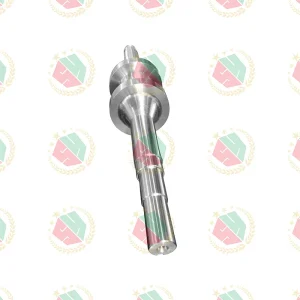
Monel K-500 builds on the same corrosion base but delivers significantly higher strength after aging. It remains non-magnetic to approximately −101°C (−150°F), which is an advantage in certain downhole and sensor components. The trade-off is that the aging treatment adds process steps and requires furnace control; a K-500 part is not simply a Monel 400 part with a different label.
Work-hardening and its consequences
Monel alloys work harden rapidly during cutting and cold forming. In machining, the surface layer strain-hardens immediately ahead of and behind the cutting edge, which raises cutting forces, accelerates tool wear, and can lead to built-up edge and poor surface finish if the operation is not controlled. This is not a defect of the material; it is a characteristic that shapes the manufacturing plan. It is also the reason Monel alloy machining is often approached with sharp tooling, positive rake geometry, and cutting parameters that avoid dwelling in the cut.
For part buyers, the work-hardening tendency has a direct procurement implication. A shop that treats Monel like 316 stainless steel will likely struggle with tool life, dimensional consistency, and surface integrity. The supplier’s machining approach is therefore part of what should be evaluated, not an afterthought.
Manufacturing Processes for Monel Alloy Parts
Monel alloy components are produced through four main routes: casting, machining, forging, and forming/welding. Casting and machining dominate the part-making landscape, and they are treated here in that order.
Casting
Casting is used when the part geometry is complex, when internal passages or cored features are required, or when producing a near-net shape reduces material waste and subsequent machining. Sand casting, investment casting, and centrifugal casting are all applied to nickel-copper alloys.
Casting Monel presents process challenges that a foundry must control. The alloy has a relatively high melting range, around 1,300°C to 1,350°C, and it is prone to gas absorption and shrinkage porosity if gating and risering are not designed correctly. Pouring temperature control, mold permeability, and feeding practice all affect soundness. These are foundry-process issues, but they become the buyer’s issue when a casting is specified without a soundness requirement. A casting purchase should state the acceptance criteria for porosity and the inspection method, not just the alloy grade.
Nickel alloy casting parts for Monel service commonly include pump bodies, valve bodies, impellers, and fittings. The foundry’s experience with nickel-copper alloys is a more meaningful qualification criterion than general ferrous casting experience, because the solidification and gas behavior differ.
Machining
Machining covers turned, milled, drilled, and threaded features, and it is the default route for parts produced from bar, plate, or forgings: shafts, bolts, flanges, valve stems, and connectors. Monel 400 machining is widely practiced but demands respect for the alloy’s work-hardening behavior and its tendency to generate heat at the cutting zone.
The practical machining rules for Monel are consistent across technical sources: use sharp, positive-rake tooling; maintain adequate feed and depth of cut to get under the work-hardened layer; avoid rubbing or dwelling; and plan roughing and finishing so that the finished surface is not left with a damaged layer. Carbide tooling is common, and ceramic or PCBN tooling is used in some operations where the machine and setup are rigid enough. When a Monel part requires tight tolerances and a good surface finish, the machining sequence may include a stress-relief step between roughing and finishing to control distortion.
Nickel alloy machining parts in Monel therefore differ from stainless steel parts in cycle time and tooling cost, even when the geometry is similar. A supplier who understands this will quote and plan accordingly; a supplier who does not may deliver parts with inconsistent dimensions or surface integrity.
Forging and forming
Forging is used for parts that need oriented grain flow and improved mechanical properties, such as shafts, valve bodies, and high-integrity fasteners. Monel 400 forging stock is covered by standards such as ASTM B564, and forgings can subsequently be machined to final dimensions. Forming and welding are relevant for plate-based components, tube assemblies, and welded fabrications. Monel 400 has good weldability by conventional processes, with filler metal selection and cleanliness being the main controls; post-weld heat treatment is not always required for corrosion resistance, though stress relief may be specified for dimensional stability.
For most custom Monel parts, the manufacturing route is not a single process but a chain. A cast pump housing may be machined on its flange faces and bore; a forged shaft may be turned, threaded, and ground. Monel component manufacturing therefore involves decisions at each step, and the purchase specification should make clear which steps are the supplier’s responsibility.
Monel Alloy Casting vs. Machining: When to Use Each
The choice between casting and machining for a Monel alloy part is driven by geometry, quantity, tolerance, and inspection requirements, not by a preference for one process over the other. Both routes are legitimate, and both can produce parts that meet the same material specification.
Casting is the appropriate route when the part has a complex external shape or internal passages that would require extensive machining from solid, when the quantity justifies tooling and pattern costs, or when near-net shape reduces the total cost of material and machining. A pump volute, a valve body with a tortuous flow path, or an impeller with curved vanes are natural castings. The casting route moves the geometric complexity into the mold, where it is repeated economically across a production run.
Machining from bar, plate, or forging is the appropriate route when the part is geometrically simple but dimensionally demanding, when the quantity is low or the design is still being iterated, or when the material’s properties in the wrought form are required. A Monel fitting produced as a machined part from hex bar, a monel bolt turned and threaded from round bar, or a valve stem machined from bar stock are common examples. Machining gives direct control over tolerances, surface finish, and thread quality, and it avoids the tooling lead time that casting requires.
The two routes are often combined. A Monel alloy casting may be specified with machining allowances, then bored, faced, drilled, and tapped to final dimensions. This hybrid approach is common for pump and valve components: the foundry delivers a sound near-net casting, and the machine shop establishes the critical fits and sealing surfaces. For the buyer, the key is to define which surfaces are as-cast and which are machined, and to specify the inspection requirements for both.
A practical judgment framework looks at four variables. Geometry complexity favors casting. Quantity favors casting once tooling is amortized, while low quantity favors machining. Tolerance and surface finish requirements favor machining for the critical features. And the acceptable inspection route matters: castings may require radiography or penetrant inspection for internal soundness, while machined parts are verified dimensionally and by surface finish. None of these variables alone decides the route; they are weighed together.
Custom Monel parts are frequently specified without the buyer stating a preferred process. In that situation, the supplier’s process recommendation should be treated as a technical proposal, not a default. The buyer should ask why casting or machining was chosen, what the expected soundness or tolerance capability is, and how the inspection plan matches the part’s function.
Typical Types of Monel Alloy Parts
Monel alloy parts appear in several recognizable functional families. The table below maps common types to their usual manufacturing route, grade tendency, and service role. The grade column indicates the prevailing choice, not an exclusive rule; the actual grade must follow the service condition.
| Part type | Common manufacturing route | Typical Monel grade | Primary service role |
| Fasteners: bolts, nuts, washers | Machining from bar | Monel 400 or K-500 | Corrosion-resistant bolted connections in marine and chemical service |
| Fittings: elbows, tees, connectors, flanges | Machining or casting, depending on size and quantity | Monel 400 | Piping connections in seawater and chemical systems |
| Fluid-handling components: pump bodies, impellers, valve bodies, stems, seats | Casting, machining, or casting plus machining | Monel 400 for corrosion duty; K-500 for higher-strength shafts and stems | Moving and containing corrosive fluids |
| Structural and shaft components: shafts, sleeves, bushings, brackets | Machining from bar or forging | Monel 400 or K-500 | Load-bearing parts in wet or corrosive environments |
| Heat-transfer components: tube sheets, tubing, exchanger parts | Rolling, forming, machining, welding | Monel 400 | Heat exchange in seawater and chemical processes |
Fasteners deserve specific attention because they are a high-volume Monel part category. Monel bolts and nuts are produced to fastener standards such as ASTM F467 and F468 for nonferrous bolting, and Monel 400 fittings are commonly purchased to ASTM B366 or equivalent fitting specifications. These standard designations matter: a “Monel bolt” without a standard and grade callout is not a complete purchase description.
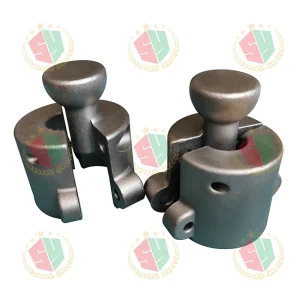
Custom Monel parts and Monel alloy components ordered to drawing occupy a different purchasing lane. For these, the drawing defines the geometry, tolerances, and material callout, and the supplier’s responsibility is to execute the manufacturing route and inspection plan. The distinction between a standard-part purchase and a custom-part purchase changes what the buyer needs to specify: a standard part is defined by its standard number and grade, while a custom part is defined by its drawing, material certification, and inspection requirements.
Industrial Applications of Monel Alloy Parts
Monel alloy parts are selected where the combination of corrosion resistance, strength, and toughness fits a specific industrial exposure. The applications below are organized by the service condition that drives the material choice, not as a list of industries for their own sake.
Chemical processing
Chemical equipment handling hydrofluoric acid, sulfuric acid under reducing conditions, and alkaline streams is a core Monel territory. Monel 400 parts appear in reactor internals, heat-exchanger tubing, piping components, pump and valve trim, and pickling-line equipment. The common thread is a reducing or non-oxidizing chemical environment where the nickel-copper solid solution provides a stability that stainless steels cannot match. The corresponding caution is equally relevant: strongly oxidizing media, such as nitric acid or solutions containing ferric ions, are outside Monel’s intended range. A chemical application inquiry should therefore state the medium, concentration, temperature, and aeration status, because those variables determine whether Monel is the right alloy at all.
Marine and seawater service
Seawater pumps, valves, heat exchangers, piping fittings, and fasteners are among the most established uses of Monel 400. The alloy resists flowing seawater and chloride stress corrosion cracking, and it is used for pump shafts, impellers, valve stems, and seawater piping components. Monel K-500 extends the same corrosion base to higher-strength shafts and fasteners where Monel 400’s strength is insufficient. The marine environment also illustrates why grade and process must be matched: a cast Monel 400 valve body and a machined K-500 pump shaft in the same seawater system are doing different mechanical jobs with the same alloy family.
Pump and valve manufacturing
Pump and valve makers are major consumers of Monel alloy parts because their products combine corrosive media with mechanical motion. Pump casings, impellers, shafts, wear rings, valve bodies, seats, stems, and trim are all candidates for Monel 400 or K-500 depending on the strength and wear requirements. The manufacturing route mirrors the geometry: casings and bodies tend toward casting or casting plus machining, while shafts, stems, and trim tend toward machining from bar or forging. For a pump or valve OEM, the relevant question is not simply “Monel or stainless” but which Monel grade and which manufacturing route will deliver the required pressure boundary, dimensional control, and corrosion life.
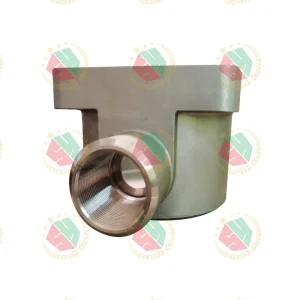
Other industrial uses
Monel parts also appear in oil and gas production equipment, power-plant heat exchangers, and food and pharmaceutical processing where a corrosion-resistant, cleanable metallic surface is needed. In oil and gas, Monel K-500 is used for non-magnetic components such as drill collars and oil-well tools, and Monel 400 is used for valves and fittings in corrosive service. These applications share the same selection logic: the medium and mechanical duty come first, and the grade and process follow. Nickel-copper alloy parts is the materials-language description for the same family, and it is useful when the procurement specification is organized by alloy system rather than by trade name.
What to Confirm When Sourcing Monel Alloy Parts
A Monel alloy part purchase fails in predictable ways: the grade is ambiguous, the standard is missing, the process route is left to the supplier without qualification, or the inspection requirements are not stated. The confirmation list below is organized around the decisions that actually affect whether the delivered part performs.
Material grade and standard. The purchase order should state the UNS number, not only the trade name. For Monel 400, that is UNS N04400; for Monel K-500, UNS N05500. The applicable product standard should also be cited: for example, ASTM B127 for plate, B164 for bar, B165 for tube, B564 for forgings, or B865 for K-500 bar, rod, and forgings, depending on the product form and grade. For castings, the applicable ASTM casting specification should be confirmed separately before the purchase order is issued; the standards listed above cover wrought forms and K-500 bar/forgings, not general Monel casting procurement. A drawing that says “Monel” without a UNS number and a product-form standard leaves the supplier to interpret the requirement.
Drawing, dimensions, and tolerances. For custom Monel parts, the drawing revision must be current, and the critical dimensions, tolerances, surface finish, and thread specifications must be legible. For castings, the drawing should distinguish as-cast surfaces from machined surfaces and should state machining allowances and draft requirements. For machined parts, the datum scheme and inspection method should be unambiguous.
Manufacturing process confirmation. The buyer should know whether the supplier intends to cast, machine from bar or forging, or combine both. If casting is proposed, the foundry’s nickel-copper experience and the soundness inspection method should be confirmed. If machining is proposed, the supplier’s approach to work-hardening control and tooling should be part of the technical discussion. Monel alloy casting and Monel alloy machining are not interchangeable defaults; they carry different capability profiles.
Heat treatment and condition. For Monel K-500, the aging treatment is a specified process step and should be confirmed against the applicable standard and product form. For Monel 400, the condition — annealed, stress-relieved, or cold-worked — should be stated because it affects strength, dimensions, and machining behavior. A certificate that reports “Monel K-500” without the aging condition is incomplete.
Inspection and documentation. A material test certificate with chemical composition and mechanical properties is the baseline. For castings, the buyer may specify radiographic, penetrant, or ultrasonic inspection depending on the part’s pressure or structural duty. For machined parts, dimensional inspection reports and surface finish records are the corresponding evidence. Heat lot traceability should be maintained from the mill certificate through to the finished part.
A compact inquiry checklist is useful: material grade and UNS number; applicable ASTM or AMS standard for the product form; drawing revision and critical dimensions; manufacturing route (cast, machined, or both); heat treatment condition; inspection requirements and documentation; and heat lot traceability. For standard Monel fittings or monel bolts, the standard number and grade replace the drawing, but the material certification and traceability requirements remain.
FAQ
Can Monel 400 and Monel K-500 parts be used interchangeably?
Not as a default. K-500 is age hardened and substantially stronger, while Monel 400 is the solid-solution grade. They share a corrosion-resistant base, but the strength, heat treatment, and machining behavior differ. A substitution should be evaluated against the actual load and service condition, not assumed.
Are Monel alloy parts weldable?
Monel 400 has good weldability by TIG and MIG processes using matching nickel-copper filler metal, with cleanliness and heat input control being the main practical requirements. Post-weld heat treatment is not always required for corrosion resistance, though stress relief may be specified where dimensional stability matters. Welding procedure qualification remains the supplier’s responsibility.
How does a buyer choose between Monel and stainless steel for seawater service?
The choice depends on the specific seawater condition and the part’s mechanical duty. Monel 400 is selected where chloride stress corrosion cracking resistance and performance in flowing seawater are required, while stainless steels have different limitations and cost profiles. The decision should be based on the medium, flow condition, temperature, and required strength, not on a general preference for one alloy family.
Is “monel alloy part” the same as “Monel 400 part”?
No. Monel alloy part is the broader term for any part made from the nickel-copper alloy family. A Monel 400 part is a part made specifically from UNS N04400. K-500 parts are also Monel alloy parts, but they are not Monel 400 parts.
What drawing information is needed for a Monel casting?
The drawing should show the as-cast geometry, machining allowances, draft angles, critical machined surfaces, tolerance requirements, and the locations and acceptance criteria for any specified non-destructive inspection. The material callout should include the casting grade and UNS number, and the applicable ASTM casting standard should be confirmed with the foundry before the order is placed.
What affects the lead time for Monel alloy parts?
Lead time depends on the grade, product form availability, whether casting tooling is required, the machining content, and the inspection scope. A machined part from stocked bar may move faster than a new casting pattern plus first-article approval. The buyer should ask the supplier to state the lead time drivers rather than quote a single number without basis.
Monel alloy parts are specified when the service condition demands more than a conventional stainless steel can deliver in reducing acids, seawater, or alkaline process streams. The material family is narrow — nickel-copper, with Monel 400 and K-500 covering most part requirements — but the decisions around it are not. Grade selection, manufacturing route, heat treatment, and inspection form a chain, and a weak link at any point can compromise the finished component. A buyer who brings a drawing, a UNS number, a product-form standard, a stated process expectation, and an inspection requirement to the supplier conversation is in a far stronger position than one who asks for “Monel parts” and waits for a quotation. If a specific Monel alloy part requirement is already defined, the next step is to organize those five elements and request a technical and commercial response against them.











