Summary: This overview covers Stellite alloy parts market growth drivers, major end industries, supply risks and procurement trends for custom casting buyers and industrial engineers.
Overview of the Stellite Alloy Parts Market
The Stellite market sits within the broader cobalt-based hardfacing and high-performance alloy space.
A critical distinction separates solid cast or machined Stellite components from consumable Stellite powder, welding wire and overlay filler materials.
Solid Stellite alloy parts, such as valve seats, bushings, plugs and turbine sealing segments, form a high-value, low-to-medium volume niche focused on mission-critical spare parts rather than general commodity hardware.
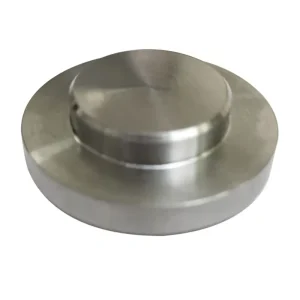
Unlike stainless steel or standard tool steel selected primarily for low upfront cost, Stellite is specified when assets cannot tolerate premature erosion, cavitation, high-temperature oxidation or adhesive wear.
Demand tracks closely with capital spending cycles in heavy process industries.
Internal link suggestion: Stellite Alloy Parts Selection Guide (A01) – anchor text: Stellite grade selection guide
Core Growth Drivers for Stellite Alloy Components
Rising adoption of custom Stellite machined and cast parts stems from performance limits of cheaper alloys, paired with an industry-wide shift toward total cost of ownership (TCO) planning.
Rising demand for components under high wear, corrosion and high-temperature service
Many process assets operate under cyclic thermal stress, abrasive particle flow or corrosive fluid media.
Standard martensitic stainless steels and common nickel alloys degrade rapidly in cavitation-prone valve trim, high-temperature sealing interfaces and slurry-handling assemblies.
Stellite grades retain hardness and corrosion resistance at elevated temperatures, helping operators avoid unplanned equipment shutdowns.
Extended service life and reduced equipment downtime for critical assets
Large asset owners in oil and gas, power generation and chemical processing increasingly evaluate spare parts by service interval instead of unit price.
Although Stellite components carry a higher upfront purchase cost, longer service intervals reduce labour, shutdown and replacement expenses over the equipment lifecycle.
This TCO-focused mindset is one of the most consistent demand drivers.
Global investment in energy infrastructure and process equipment upgrade
Ongoing investment in pipeline networks, refinery revamps, gas-fired power facilities and chemical plant modernisation creates recurring demand for high-reliability valve trim and wear inserts.
Brownfield retrofit projects frequently upgrade legacy components to Stellite when repeated wear failures create operational bottlenecks.
Key End-User Industries Fueling Market Demand
Stellite alloy parts demand concentrates across industrial sectors with severe operating conditions.
Each vertical relies on a distinct set of custom components.
Oil & gas and petrochemical (valve seat, ball, plug, sleeve)
Oil and gas and petrochemical applications form the largest single demand segment for custom Stellite castings.
Control valves, check valves and choke trim exposed to sour service, high pressure, flashing fluid and cavitation commonly specify Stellite 6, Stellite 12 or Stellite 21.
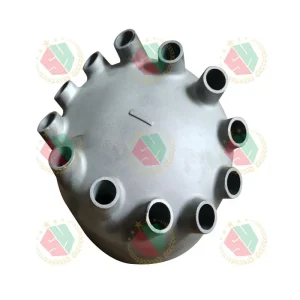
Internal link suggestion: Valve Seat and Seat Ring Material Guide for Check Valve (A04) – anchor text: check valve seat material guide
Power generation: gas turbine, steam turbine components
Power generation OEMs and service providers source Stellite wear strips, sealing segments and valve components for gas and steam turbine systems.
These parts must resist thermal fatigue, hot gas erosion and oxidation under continuous high-temperature cycling.
Pharmaceutical & food homogenization equipment
High-pressure homogenizers used for vaccine, dairy and biopharmaceutical manufacturing depend on precision Stellite poppets and valve guides.
Material stability, wear resistance and cleanability are non-negotiable in sanitary processing environments.
Internal link suggestion: Homogenizer Valve Parts: Material Selection, Wear Failure & Machining Requirements (A03) – anchor text: homogenizer valve parts guide
Chemical processing, marine and metallurgical leveling equipment
Chemical reactors and transfer manifolds use Stellite sleeves and nozzles to handle corrosive, abrasive media.
Metallurgical roll forming and plate leveling lines install Stellite inserts to extend roller service life under constant metal-to-metal contact.
Marine valve systems also select cobalt alloys for resistance against saltwater erosion.
Medical and aerospace critical components
Aerospace and medical-grade Stellite components represent a smaller, high-barrier submarket.
These applications require full material traceability, third-party NDT validation and strict biocompatibility or aerospace certification.
Supplier qualification timelines are substantially longer for these regulated use cases.
Main Market Challenges & Supply-Side Risks
Buyers sourcing Stellite parts need to account for structural risks built into the supply chain and manufacturing workflow.
Cobalt raw material supply concentration & export policy risks
Cobalt, the base metal for standard Stellite grades, is geographically concentrated.
Supply disruptions, export controls, labour instability and shifting mining output can drive rapid swings in raw material pricing.
These cobalt price fluctuations pass directly to custom casting quotes and can destabilise quoted lead times.
High machining difficulty and limited qualified foundry capacity
Stellite alloys are difficult to machine due to high hot hardness and strong work-hardening behaviour.
Casting also carries inherent risks including hot cracking and porosity.
Only a subset of investment casting foundries maintain stable process controls and tooling experience for repeatable Stellite production.
This limited capacity can extend lead times during demand peaks.
Price gap between Stellite and alternative wear alloys
For cost-sensitive projects, engineering teams regularly evaluate alternatives such as hardened 420 stainless steel, hard-chrome plating, thermal spray coatings and nickel-based hardfacing alloys.
While these alternatives cannot match Stellite performance under the harshest operating conditions, they capture some project volume where asset owners accept shorter service life to reduce upfront capital spend.
Regulatory and qualification barriers for aerospace/medical grades
Commercial-grade Stellite castings are simpler to source, but aerospace and medical specifications require documented heat treatment records, material test certificates and approved inspection protocols.
Many custom foundries lack the certifications needed for these sectors, narrowing the pool of qualified suppliers.
Sourcing & Procurement Trends for Custom Stellite Parts
Procurement behaviour for Stellite alloy components has shifted toward integrated, technical supplier partnerships instead of simple commodity quoting.
Modern buyers increasingly prefer vendors offering a full workflow: investment casting, stress relief, precision CNC machining, hardness testing and NDT inspection delivered under one purchase order.
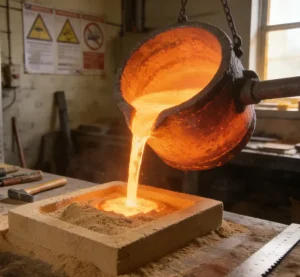
Standalone casting houses without in-house precision machining capability are less competitive for complex valve trim and homogenizer components.
Small-batch, drawing-based custom orders have grown, as end users avoid stocking large inventories of high-cost cobalt alloy spares.
Most serious buyers now require material certificates, hardness reports and dimensional inspection records before accepting delivery.
A widely adopted cost-control strategy is partial overlay hardfacing: applying Stellite weld overlay onto a stainless steel substrate instead of manufacturing a fully solid Stellite part.
This reduces cobalt consumption and material cost, though overlay solutions carry distinct limits on coating thickness and design geometry.
Long-Term Market Outlook & Opportunities for Custom Foundries
The Stellite alloy parts market is forecast to maintain stable, moderate growth rather than rapid expansion.
Growth tracks closely with heavy industry capital cycles and energy transition spending, as many traditional process assets will remain operational for decades.
Key opportunities for qualified custom foundries centre on reliable high-yield production and technical application support.
Buyers do not only require a machined component; they also seek guidance to select the correct Stellite grade for their specific fluid, temperature and wear mode.
This technical advisory layer creates differentiation for suppliers able to combine material knowledge with casting and machining expertise.
Demand carries clear cyclical risk. Sharp reductions in oil and gas capex, for example, can suppress valve trim orders for multiple quarters.
Long-term planning should treat Stellite as a high-performance niche rather than a fast-growing mass alloy category.
Internal link suggestion: Stellite valve seat / Stellite bushing product page – anchor text: custom Stellite wear parts
Frequently Asked Questions
Is Stellite alloy still in high demand?
Yes. Demand remains strong for critical wear components in oil and gas valves, power turbines and high-pressure process equipment.
Demand is stable rather than booming, tied to reliability requirements for assets that cannot tolerate frequent downtime.
What factors affect Stellite casting prices?
Cobalt spot price is the dominant variable.
Additional cost drivers include casting complexity, required machining tolerance, heat treatment, NDT testing, order batch size and certification requirements.
What are common alternatives to solid Stellite cast parts?
Common alternatives include Stellite hardfaced overlay on stainless steel, hardened martensitic stainless steel, tungsten carbide coatings and selected high-strength nickel alloys.
Overlay options reduce material cost, but they have thickness limits and may fail prematurely under severe particle erosion or cyclic thermal load.
Each alternative balances lower upfront cost against reduced wear or temperature performance.
What lead time should buyers expect for custom Stellite machined parts?
Lead times vary widely by foundry capacity, part complexity and testing scope.
Compared with standard stainless steel investment castings, Stellite parts generally require longer production cycles due to tighter process controls and slower machining speeds.











