Summary: This guide compares Inconel, Incoloy, Hastelloy and Monel nickel alloys, covering temperature limits, corrosion resistance, casting and machinability for industrial spare part selection.
This guide covers widely used nickel alloy grades including Inconel, Incoloy, Hastelloy and Monel, with practical data on temperature limits, corrosion resistance, casting and machinability to support industrial spare part material selection.
Nickel based alloy parts outperform standard stainless steel and carbon steel when equipment faces sustained high heat, aggressive corrosive fluids, or combined mechanical and chemical loading.
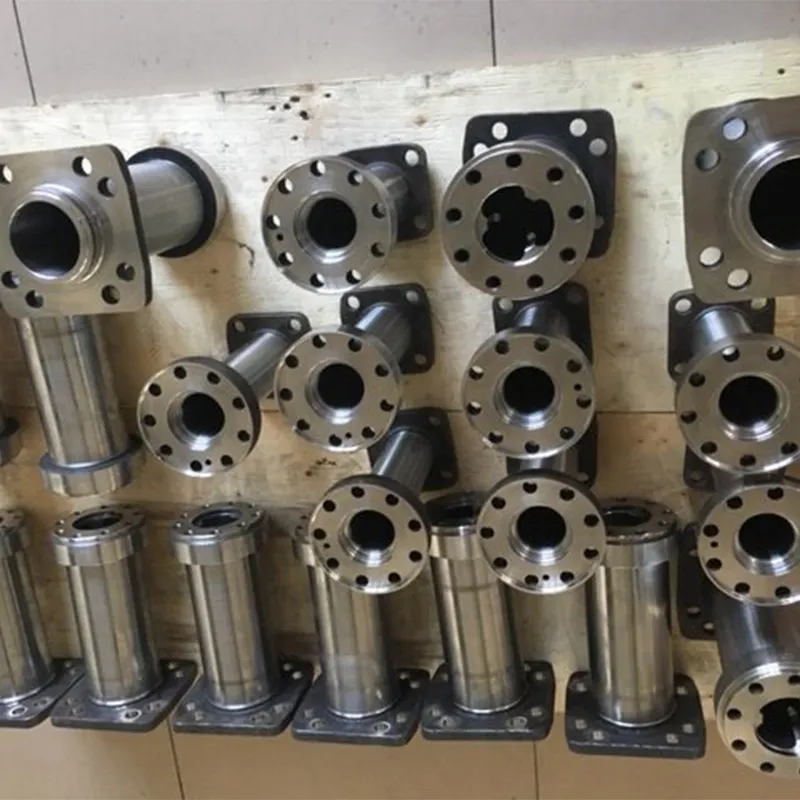
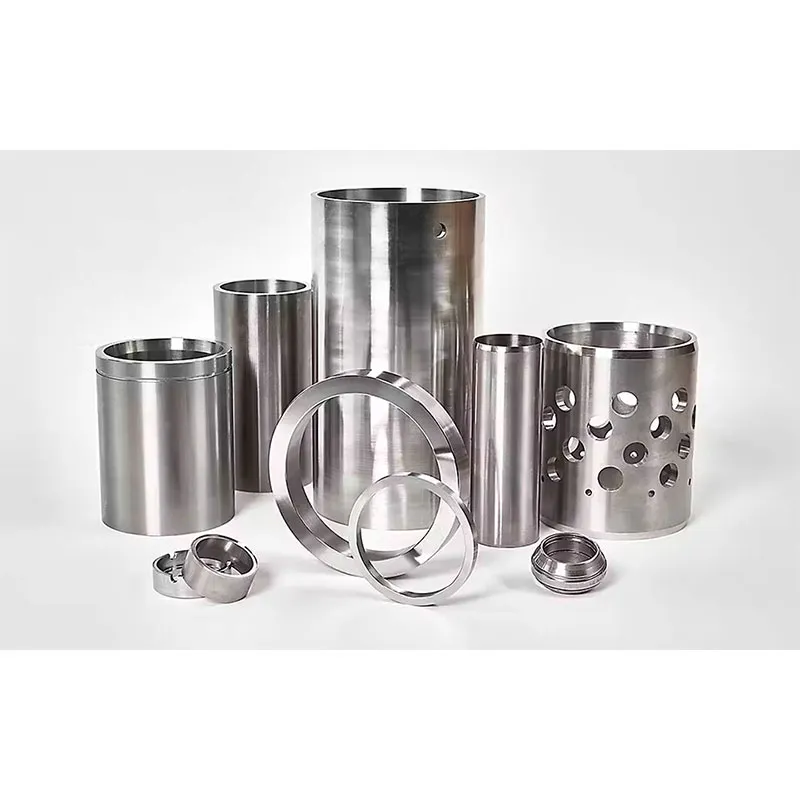
Both cast nickel alloy components and machined nickel alloy blanks serve critical functions across heavy process industries.
Introduction to Nickel Based Alloy Parts
Nickel based alloys are metallic materials with nickel as the primary matrix element, alloyed with chromium, molybdenum, iron, copper and other elements to tailor mechanical and corrosion properties.
Their biggest advantage is stable performance under combined stressors that degrade ordinary steels: high-temperature creep, oxidation, pitting, crevice corrosion and attack by acidic or chloride-rich media.
A key distinction separates wrought nickel alloy components and cast nickel alloy parts.
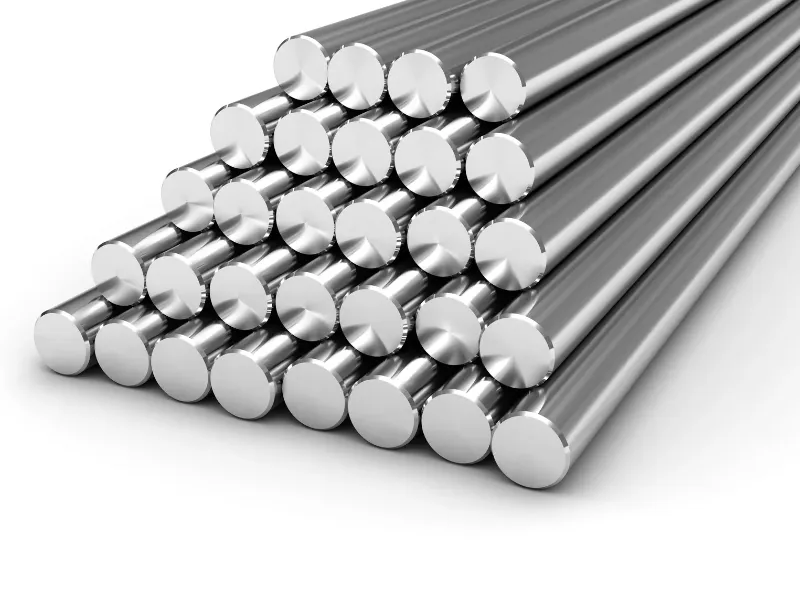
Wrought variants are forged or rolled then CNC machined, offering tighter grain control and superior tensile strength for high-load designs.
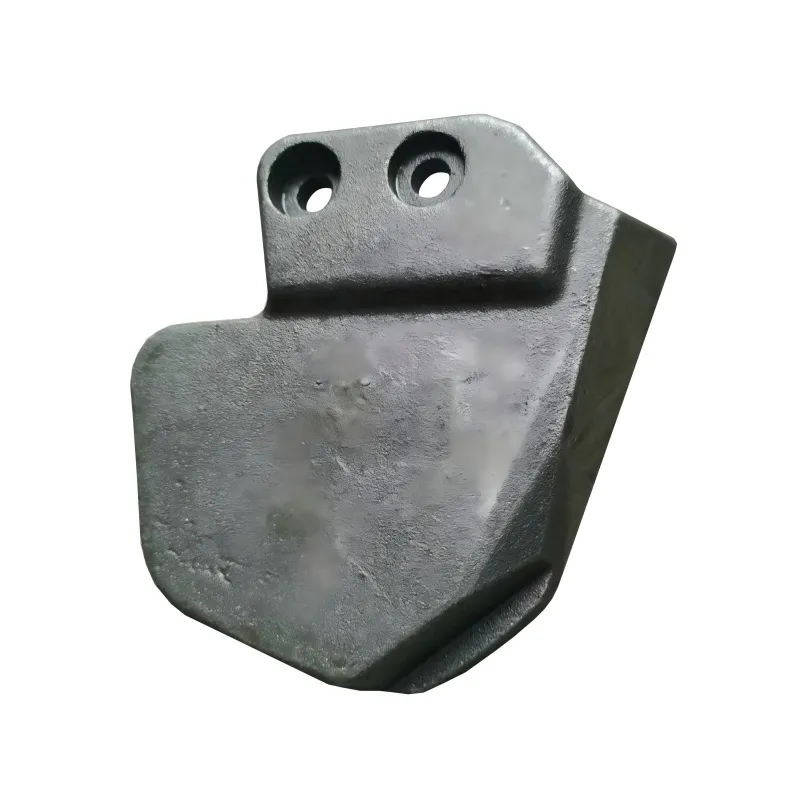
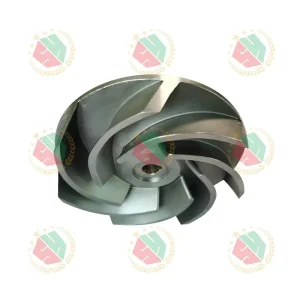
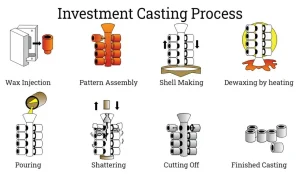
Cast nickel alloy parts, produced via investment casting, suit complex geometries such as valve trim, nozzles and custom wear inserts where near-net shaping reduces total machining work.
It is helpful to distinguish these materials from Stellite alloy components.
While Stellite cobalt alloys excel at abrasive wear, cavitation and hardfacing service, nickel alloys are selected primarily for corrosion resistance and high-temperature structural integrity.
Each family fills a separate niche in spare part specification.
Main Nickel Alloy Families & Grade Overview
Nickel alloys are grouped by alloying systems and core performance strengths. Four families dominate industrial custom component orders: Inconel, Incoloy, Hastelloy and Monel.
Inconel Alloy Series
Inconel grades are nickel-chromium alloys, often with molybdenum, niobium or titanium additions.
They are engineered to retain strength and oxidation resistance at elevated temperatures.
The two most widely specified Inconel alloy parts are Inconel 625 and Inconel 718.
Inconel 718 uses precipitation hardening to deliver high tensile and creep strength, making it the default for loaded hot-section hardware.
Inconel 625 relies on solid-solution strengthening, with excellent resistance to chloride pitting and a broader corrosion tolerance in mixed media.
Incoloy Alloy Series
Incoloy grades are iron-nickel-chromium alloys.
The iron content reduces raw material cost compared to pure nickel-rich Inconel grades while preserving good resistance to aqueous corrosion at moderate temperatures.
Incoloy 825 is the flagship grade in this group.
It balances resistance to sulfuric acid, phosphoric acid and chloride stress corrosion cracking, a common choice for downstream chemical and oilfield equipment.
Hastelloy Alloy Series
Hastelloy is a nickel-molybdenum-chromium alloy family built for severe chemical corrosion.
High molybdenum content gives Hastelloy alloy parts strong tolerance to reducing acids, mixed acid streams and chloride-containing process fluids.
This family is the first consideration for reactors, transfer manifolds and valve trim exposed to aggressive chemical media where stainless steel or standard Inconel fails rapidly.
Monel Alloy Series
Monel alloys are nickel-copper alloys with minimal chromium. Monel 400 is the most common grade.
It offers excellent resistance to hydrofluoric acid and seawater erosion, with good ductility and relatively easier machining compared to many high-alloy nickel grades.
It is widely used in marine, desalination and hydrofluoric acid handling systems.
| Alloy Grade | Key Composition | Max Continuous Service Temp | Resistant Media | Castability | Machining Difficulty | Typical Spare Parts |
| Inconel 625 | Ni-Cr-Mo-Nb | 980°C | Oxidizing media, chlorides, seawater | Moderate; prone to hot tearing | High, work-hardening | Gas turbine seals, chemical nozzles, valve bodies |
| Inconel 718 | Ni-Cr-Mo-Nb-Ti | 700°C | High-temperature air, mild corrosives | Fair; sensitive to casting cooling rate | Very high; requires rigid tooling | Turbine disks, high-pressure valve plugs, fasteners |
| Incoloy 825 | Ni-Fe-Cr-Mo-Cu | 540°C | Sulfuric acid, phosphoric acid, brine | Good | Moderate | Heat exchanger tubesheets, oilfield tubing components |
| Hastelloy grades | Ni-Mo-Cr | 700–1090°C (grade dependent) | Mixed acids, reducing/oxidizing chemical streams | Moderate | High | Reactor internals, chemical valve trim, orifice plates |
| Monel 400 | Ni-Cu | 480°C | Seawater, hydrofluoric acid, alkaline media | Good | Low-moderate | Marine valve seats, pump shafts, seawater piping fittings |
Note: Hastelloy covers multiple distinct grades; this temperature range is a broad reference. Always verify limits against the datasheet for your exact Hastelloy grade.
Performance Breakdown by Nickel Alloy Grade
When comparing nickel alloy parts for a project, three performance categories drive most specification decisions: high-temperature stability, corrosion resistance and mechanical behaviour.
High-temperature strength & oxidation resistance
Inconel grades lead this category. Inconel 625 maintains surface stability against oxidation up to roughly 980°C in clean air, while Inconel 718 is limited to lower continuous temperatures because its precipitation-hardened microstructure breaks down at extreme heat.
Hastelloy can offer good high-temperature corrosion resistance, but its mechanical creep performance is not a match for Inconel in long-duration hot-load service.
Monel and Incoloy are not designed for sustained ultra-high-temperature duty; their strength drops quickly above their rated temperature limits.
A critical note: published temperature ratings apply to clean air service.
Corrosive vapours, sulfur or molten salt environments will drastically reduce safe operating temperatures.
Corrosion resistance for different service media
Each alloy family has clear strengths and blind spots:
- Inconel: Strong against oxidation and chloride pitting, less economical for concentrated reducing acids.
- Hastelloy: Best choice for mixed acid and reducing chemical environments, though expensive.
- Incoloy 825: Cost-effective for dilute sulfuric and phosphoric acid, and brine environments.
- Monel 400: Excellent with hydrofluoric acid and seawater, poor performance in strong oxidising acids such as nitric acid.
Many specification failures happen when engineers select a high-temperature alloy without checking compatibility with the actual process fluid.
Mechanical properties at room and elevated temperature
Inconel 718 stands out for high yield strength after age hardening, which is why it is used for load-bearing rotating and pressure-containing components.
Inconel 625 has lower room-temperature strength but better fabricability and corrosion versatility.
Monel 400 delivers good ductility and impact resistance, which suits pump and valve parts subject to shock loading.
Manufacturability: Casting & CNC Machining of Nickel Alloy Parts
Manufacturability directly affects lead time, cost and final part quality for both cast nickel alloy components and machined nickel alloy blanks.
Nickel alloys are widely recognised as difficult-to-machine materials, though difficulty varies sharply by grade.
Castability of nickel alloys
Nickel alloys with high chromium and molybdenum content carry a risk of hot cracking during solidification.
Inconel 718 is especially sensitive to thermal gradients in casting.
Investment casting foundries must control pouring temperature, mould preheat and cooling sequences to minimise porosity and hot tears.
Monel 400 and Incoloy 825 have the best castability among the group and are more forgiving for complex thin-walled castings.
Hastelloy and Inconel 625 require tighter process control and often higher reject rates.
Machining characteristics & common challenges
Once cast blanks are produced, most nickel alloy castings still require precision CNC finishing.
Work hardening is the primary machining challenge. Cutting heat builds rapidly at the tool edge, accelerating flank wear.
Shops use slow surface speeds, positive rake tool geometry and generous coolant flow for Inconel and Hastelloy.
Monel 400 machines far more readily, which is one reason it is popular for custom machined seawater components.
Inconel 718 is the most demanding; many workshops use ceramic or coated carbide tools and low feed rates to avoid work-hardened surface layers.
Post-processing: heat treatment, stress relief, NDT inspection
Heat treatment requirements differ significantly: Inconel 718 requires age hardening to unlock its peak strength, while Inconel 625 and Hastelloy are normally supplied in the solution-annealed condition.
Stress relief is standard for cast and heavily machined nickel alloy parts to reduce residual stress and distortion.
Critical service parts often require NDT inspection including penetrant testing, radiographic testing or ultrasonic inspection, depending on industry specifications for oil and gas, power or aerospace use.
Typical Industrial Applications & Spare Part Examples
Each nickel alloy family maps to a set of industrial sectors defined by process conditions.
Oil & gas and petrochemical equipment
Oil and gas valve trim, choke components, wellhead fittings and separator internals frequently use Inconel 625, Incoloy 825 and Hastelloy grades.
These alloys resist sour brine, carbon dioxide and hydrogen sulfide corrosion that attacks standard stainless steel.
Power generation (gas turbine, boiler components)
Gas turbine hot-gas path seals, combustor hardware and steam turbine bypass valve components commonly specify Inconel alloy parts for creep and oxidation resistance under cyclic high-temperature operation.
Chemical processing & acidic medium equipment
Hastelloy is the primary selection for chemical reactors, mixer nozzles, control valve trim and transfer manifolds exposed to mixed acid, chloride and oxidising media.
Marine, desalination and seawater service
Monel 400 is widely used for seawater valves, pump components and fasteners.
It withstands uniform seawater corrosion better than many common stainless grades, though it is not immune to microbiologically influenced corrosion under stagnant conditions.
Aerospace & thermal processing equipment
Aerospace hardware relies heavily on Inconel 718 for turbine and structural components.
These applications demand full material traceability, certified test reports and tightly controlled heat treatment cycles.
Nickel Alloy Grade Selection Guide for Buyers & Engineers
Selecting the correct nickel alloy grade requires balancing four core variables: operating temperature, process medium, mechanical load and total ownership cost.
Core selection criteria: temperature, medium, load, budget
Start by documenting the continuous operating temperature, peak temperature, fluid chemistry, pH, chloride concentration and whether the environment is oxidising or reducing.
Next define mechanical requirements such as static load, cyclic fatigue, pressure and wear.
If temperature is high and loading is significant, Inconel is usually the starting point.
If the dominant risk is concentrated acid corrosion, evaluate Hastelloy.
For seawater or HF service, Monel 400 is often appropriate.
For moderate corrosion with budget pressure, Incoloy 825 is a strong candidate.
Common grade substitution do’s and don’ts
Do not substitute grades based only on price. A lower-cost alloy that fails prematurely creates far higher shutdown and replacement costs.
- Do not replace Hastelloy with Incoloy for concentrated reducing acid streams.
- Do not select Monel for nitric acid or strongly oxidising environments.
- Inconel 625 is not a direct replacement for age-hardened Inconel 718 when high tensile strength is required.
Trade-off: performance vs material & machining cost
Hastelloy and Inconel 718 command the highest material and machining costs.
Monel and Incoloy offer a lower-cost entry point when their performance envelope matches the operating environment.
Many buyers also evaluate whether overlay cladding can meet requirements instead of a fully solid nickel alloy part.
Frequently Asked Questions
What is the difference between Inconel and Hastelloy?
Inconel is optimised for high-temperature strength and oxidation resistance. Hastelloy prioritises resistance to aggressive mixed acids and reducing corrosive media.
Hastelloy generally outperforms Inconel in severe chemical service, while Inconel is preferred for hot structural components.
Is Inconel 718 easier to cast than Inconel 625?
No. Inconel 718 has a narrower casting window and higher susceptibility to hot cracking, requiring stricter process controls compared with Inconel 625.
Foundries often increase wall thickness or use refined gating designs to reduce rejection rates for Inconel 718 castings.
Can Monel 400 be used for hydrochloric acid service?
Monel 400 performs well in dilute, air-free hydrofluoric acid. Its performance in hydrochloric acid depends heavily on concentration, temperature and aeration; dissolved oxygen and oxidising contaminants accelerate corrosion rapidly.
What is the difference between cast and wrought nickel alloy parts?
Wrought nickel alloy parts start from forged or rolled stock and are CNC machined, delivering higher, more consistent tensile strength.
Cast nickel alloy parts are formed via casting, better suited to complex geometries and often lower in cost for intricate spare part designs.