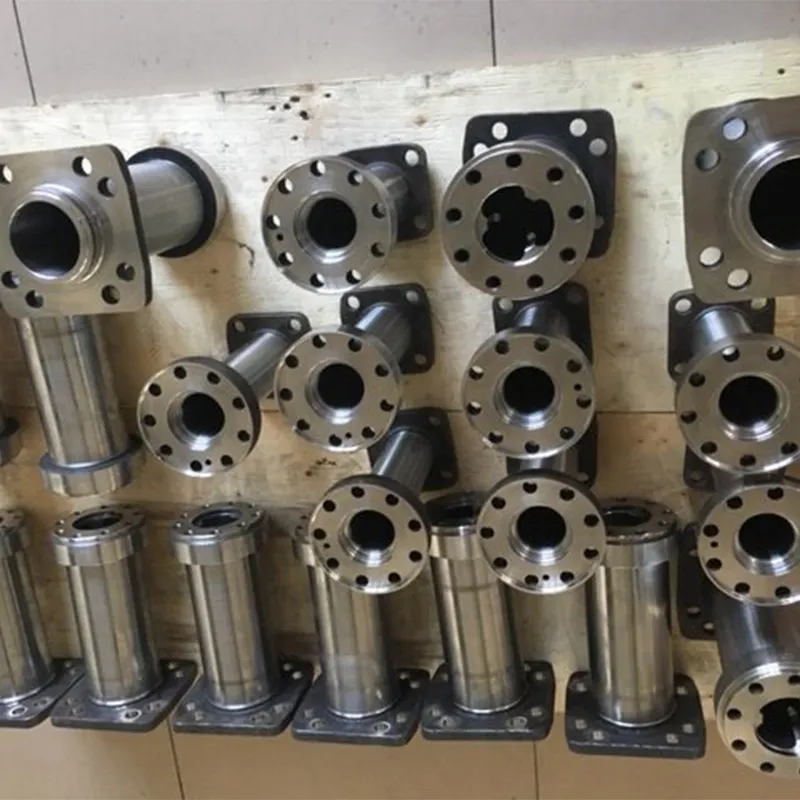
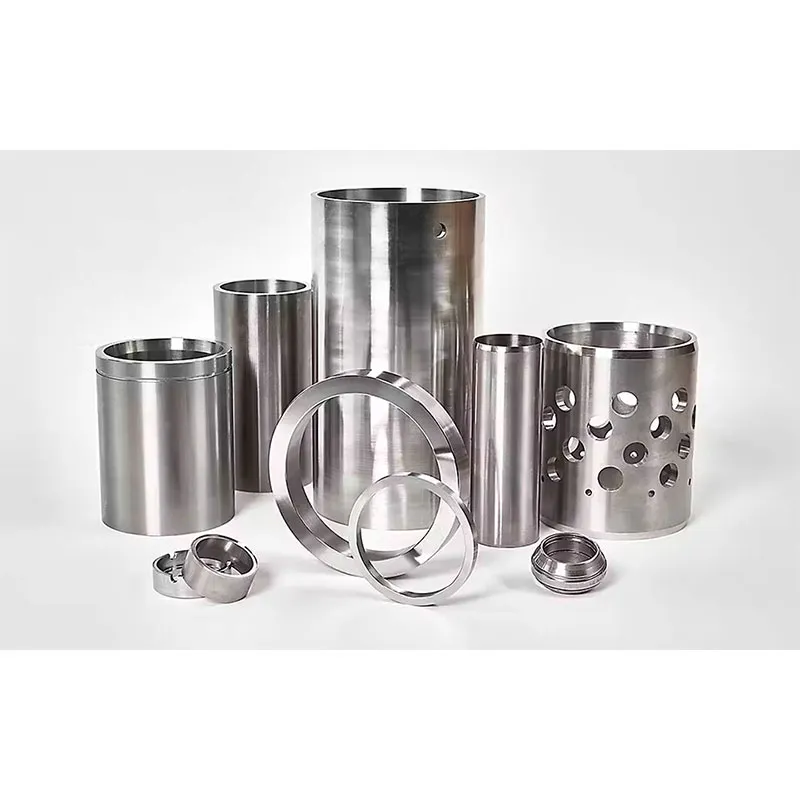
Stellite 6 is the alloy most engineers reach for first when a cobalt based alloy part needs wear protection. It is well-documented, widely available, and performs well across a broad range of abrasive and adhesive wear scenarios. But “default” is not the same as “optimal.” When a part fails not from abrasion but from thermal cycling, metal-to-metal galling, or corrosion-assisted wear, a stellite 21 part may be the more defensible choice. This comparison is written for design engineers and wear-part buyers who need to understand why the two alloys diverge, where each belongs, and what to confirm before committing to a specification.
Why Stellite 6 Is the Default—and When Stellite 21 Is the Better Choice
Stellite 6 earns its default status through a combination of high carbon content and tungsten-based solid-solution strengthening. The result is a hard, wear-resistant alloy that handles abrasive particles, erosion, and general mechanical degradation across a wide temperature range. Its manufacturing and hardfacing routes are mature, and supplier familiarity is high. For many valve seats, pump sleeves, and general wear components, Stellite 6 is a reasonable starting point.
The signal to consider Stellite 21 appears when the dominant failure mechanism shifts. If the part is cracking under repeated thermal cycles, if sealing surfaces are seizing during metal-to-metal sliding, or if the service environment combines wear with a corrosive medium, the higher hardness of Stellite 6 may not address the actual problem. Stellite 21 trades room-temperature hardness for toughness, thermal fatigue resistance, and improved corrosion behavior in certain media. The question is not which alloy is “better,” but which alloy matches how the part will fail.
How Composition Differences Drive Performance
The performance gap between these two cobalt alloys comes down to two deliberate compositional choices.
The Carbon Content Gap: Hardness vs Ductility
Stellite 6 carries roughly 0.9–1.4% carbon, while Stellite 21 holds approximately 0.20–0.35%. That difference controls how much hard carbide forms in the microstructure. Higher carbon in Stellite 6 means a greater volume of chromium-rich carbides, which directly translates to higher hardness and better resistance to abrasive wear. Lower carbon in Stellite 21 leaves more of the cobalt solid-solution matrix exposed, which reduces hardness but preserves ductility and the ability to accommodate thermal strain without cracking.
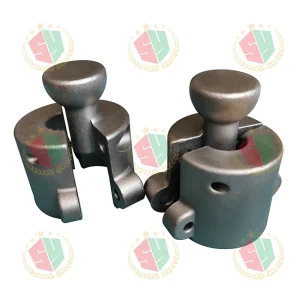
Hardness values reported for Stellite 21 typically fall in the range of 27–40 HRC, with higher values achievable through work hardening (up to approximately 48 HRC). Stellite 6, by comparison, is commonly cited at 40–45 HRC in the as-deposited condition. These figures are indicative rather than definitive: a cast or wrought Stellite 21 part may have different properties than a weld overlay, and the supplier’s actual test data should govern the specification.
Tungsten vs Molybdenum: The Solid-Solution Strengthening Logic
Stellite 6 uses tungsten for solid-solution strengthening, while Stellite 21 substitutes molybdenum. The swap is not a simple one-for-one replacement. Molybdenum has roughly half the atomic weight of tungsten, so at the same weight percentage it contributes approximately twice as many atoms to the matrix. This atomic-level difference affects how the alloy behaves at elevated temperatures.
More importantly for corrosion performance, molybdenum is generally recognized as beneficial in reducing environments. A laser-cladding study comparing the two alloys found that Stellite 21 layers exhibited better corrosion resistance than Stellite 6 layers under the test conditions employed. The molybdenum addition also reduces the tendency for intermetallic precipitation at high temperature, which supports the alloy’s thermal stability in cyclic service. These are meaningful advantages, but they are selective: Stellite 21 is not universally more corrosion-resistant than Stellite 6, and the specific medium, temperature, and aeration state must be evaluated. In cavitation erosion, for example, Stellite 6 has been reported to outperform Stellite 21 in comparative weld studies.
Performance Comparison: Hardness, Toughness, Thermal Fatigue, and Galling
The table below summarizes the practical performance differences. Values are indicative reference points, not guaranteed specifications. Final acceptance criteria should be based on the supplier’s measured data for the specific product form and manufacturing route.
| Performance Dimension | Stellite 6 | Stellite 21 | Data Note |
| Typical hardness (as-deposited) | 40–45 HRC | 27–40 HRC (work hardens to ~48 HRC) | Weld deposit reference; cast/wrought values vary |
| Abrasive wear resistance | Higher (more carbides) | Lower (limited hard-particle erosion resistance) | Stellite 21 is not recommended for severe hard-particle abrasion |
| Toughness / ductility | Lower | Higher | Consequence of lower carbide volume |
| Thermal fatigue resistance | Moderate | Better | Lower carbon + Mo reduces cracking tendency under cycling |
| Galling resistance | Good | Often preferred for metal-to-metal sliding | Selection depends on mating surface and load |
| Corrosion resistance (aqueous) | Baseline | Better in certain reducing/complex media | Laser-clad study showed Stellite 21 more corrosion resistant under test conditions |
A study on laser-clad layers found that Stellite 6 was slightly harder near the top surface, while Stellite 21 showed marginally higher sliding wear resistance due to a lower coefficient of friction—an interesting counterpoint to the assumption that higher hardness always means better wear performance. The takeaway is that wear mechanism matters more than a single hardness number.
Application Mapping: Matching the Alloy to the Failure Mode
Where Stellite 6 Fits: Valve Seats, Pump Sleeves, Abrasive Wear
Stellite 6 is the appropriate choice when the part’s primary degradation mode is abrasive or erosive wear from hard particles, slurry, or high-velocity fluid. Gate valve seats and wedges, globe valve discs, check valve flappers, and pump components exposed to abrasive media are established applications. The high carbide content provides a hard barrier against mechanical removal of material.
Stellite 6 is also the safer default when the manufacturing route involves welding or hardfacing onto a steel substrate and the supplier has extensive experience with the process. The alloy’s welding characteristics are well-characterized, and dilution control procedures are widely understood.
One caveat: if the abrasive service also involves a corrosive medium, Stellite 6 may not be the optimal grade. In that combined wear-corrosion scenario, Stellite 21 has shown better performance in laboratory evaluation.
Where Stellite 21 Fits: Thermal Cycling, Thin Sections, Gas Turbine Components
Stellite 21’s advantages emerge in three situations. First, thermal cycling: the lower carbon content and molybdenum addition reduce the driving force for cracking under repeated heating and cooling. Stellite 21 has been used in hot-working applications and as a buffer layer where thermal expansion mismatch between a steel substrate and a hardfacing must be managed. Second, thin-walled or geometrically complex parts benefit from the higher toughness, which reduces the risk of cracking during processing or service. Third, metal-to-metal sliding seals and galling-prone interfaces may perform better with Stellite 21, though this depends on the specific mating materials and contact pressure.
A published case study describes laser cladding repair of high-pressure turbine blades using Stellite 21 powder, with the repaired blades showing increased tensile strength and elongation compared to conventionally manufactured reference material. This illustrates the alloy’s role in restoring high-value components where thermal fatigue and structural integrity are critical.
One limitation deserves emphasis: Stellite 21’s low carbide volume means it offers limited resistance to hard-particle erosion. Under severe abrasive conditions involving sharp particles at speed, Stellite 6 remains the more appropriate selection.
Five Questions to Confirm Before Specifying a Stellite 21 Part
When you have decided that a stellite 21 part is the right direction, the next step is verifying that the supplier can deliver the properties you need. The alloy designation alone is insufficient, because Stellite 21’s mechanical properties depend significantly on manufacturing route and heat treatment.
1. What is the manufacturing route?
Cast, wrought, or hardfaced? Each produces different carbide morphology, hardness, and toughness. A cast part and a laser-clad overlay of the same nominal alloy are not interchangeable. Ask the supplier to state the route explicitly and provide data representative of that route.
2. Can you provide hardness distribution across the part?
A single hardness reading on a test coupon does not confirm the finished component. Request multi-point hardness data, especially for parts with varying section thickness or heat treatment response.
3. What is the heat treatment condition?
Stellite 21 can work-harden during machining and wear. The delivered condition matters. If annealing or stress relief was performed, the records should be available. If the part is used in the work-hardened condition, the extent and uniformity of work hardening should be documented.
4. Is there evidence relevant to the intended failure mode?
If the reason for selecting Stellite 21 is thermal fatigue resistance or galling resistance, ask whether the supplier has experience or test data addressing that specific mechanism. General alloy datasheets are a starting point, not a substitute for application-specific evidence.
5. What documentation accompanies the part?
Material certification, traceability to the heat or lot, and inspection records should be specified. For critical service, the certificate should identify the alloy by UNS number (R30021 for Stellite 21) and the applicable standard.
FAQ
Is Stellite 21 more corrosion-resistant than Stellite 6?
In certain media, particularly reducing or complex acidic environments, Stellite 21 has shown better corrosion resistance in comparative studies. However, it is not universally superior. The specific medium, temperature, and aeration state determine performance, and a corrosion assessment for the actual service is advisable. Stellite 6, for example, has shown better resistance to cavitation erosion in weld comparison studies.
Can I substitute Stellite 6 for Stellite 21 without changing the design?
Only if the failure mechanism does not depend on the properties that differentiate them. If the original reason for selecting Stellite 21 was thermal fatigue resistance or galling resistance, substituting Stellite 6 may not solve the problem and could make it worse. The selection should be revisited against the actual failure mode.
Is Stellite 21 hard enough for wear applications?
Hardness alone is a poor selection criterion. Stellite 21 is softer than Stellite 6 in the as-deposited condition but can work-harden in service (up to approximately 48 HRC), and its wear performance depends on the mechanism. For severe hard-particle abrasion, Stellite 6 is generally preferred. For sliding wear, galling, or thermal cycling, Stellite 21 may outperform despite lower initial hardness.
Can both alloys be applied by hardfacing?
Yes. Stellite 6 is the more common hardfacing grade, but Stellite 21 is also available as welding wire and powder for overlay and cladding processes. Process parameters and dilution control differ, and the supplier should have qualified procedures for the specific alloy and substrate combination.
What is the most commonly overlooked specification when ordering Stellite 21 parts?
The manufacturing route and heat treatment condition. These factors influence the final properties more than the nominal alloy composition for Stellite 21, and a purchase specification that names only the alloy grade leaves the critical variables undefined.
Request Selection Support or Material Certification
If you are evaluating a cobalt alloy part for a wear or corrosion application and need to determine whether Stellite 21 or Stellite 6 is the better fit, the most productive next step is to share the part drawing and a description of the expected failure mode with a supplier who works with both alloys. Specify the service temperature, cycling conditions, mating surfaces, and corrosive medium if applicable. A supplier experienced with Stellite alloy parts should be able to discuss the trade-offs concretely and provide material certification, hardness data, and manufacturing route documentation for the parts you are considering.