Valve seat and seat ring are the core sealing components of check valves and industrial control valves. Improper material selection leads to premature erosion, cavitation damage, metal galling and continuous internal leakage, which triggers unplanned pipeline downtime and high maintenance costs. This guide covers valve seat structure, typical failure modes, material comparison between stainless steel and Stellite alloys, investment casting standards and surface machining requirements, helping engineers and procurement teams pick the right valve seat, seat ring and valve insert for oil & gas, chemical and steam service.
1. Overview of Valve Seat & Seat Ring in Check Valves
1.1 Definition and Structural Differences
This section answers: What is the difference between valve seat, seat ring and valve insert? What role do these parts play in check valve sealing?
- Valve seat: The fixed sealing base integrated or pressed into the valve body, which forms the primary sealing contact with the valve disc or ball.
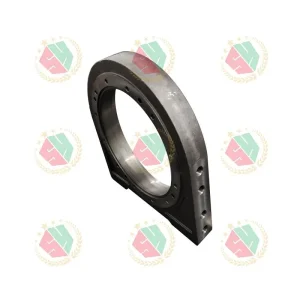
- Seat ring (check valve ring): A replaceable ring-shaped insert installed on the seat bore; it serves as the sacrificial sealing surface to protect the valve body from wear.
- Valve insert: A narrow sealing band machined on the seat ring, usually hardfaced with Stellite alloy for severe service.
Swing check valves and lift check valves adopt different seat structures. Lift check valves feature a flat, narrow seat band, while swing check valves use a wider arc-shaped seat face. All metal-to-metal sealing performance depends entirely on the material quality and machining precision of these three components.
1.2 Consequences of Seat Failure
Once the seat sealing surface is damaged, the valve cannot block backflow effectively. Common outcomes include continuous medium leakage, gradual pressure loss, and full valve replacement within months instead of years.
2. Common Failure Modes of Valve Seat & Seat Ring
This section only explains failure mechanisms without introducing material solutions.
2.1 Erosion Wear (Particle Impingement & Wire Drawing)
High-velocity fluid carrying solid particles cuts linear grooves on the sealing face. This phenomenon is known as wire drawing, and it frequently occurs in high-pressure steam and slurry pipelines. Hard solid particles produce abrasive impact wear, gradually removing material from the seat band.
2.2 Cavitation Damage (Flashing & Bubble Collapse)
When fluid pressure drops below vapor pressure, liquid flashes into vapor bubbles. These bubbles collapse violently when pressure recovers, generating localized high-pressure shockwaves that create pitting and crater damage on the metal seat surface. Cavitation is widespread in throttling control valves and high differential pressure check valves.
2.3 Galling & Adhesive Wear on Metal Sealing Surfaces
When two bare metal surfaces repeatedly open and close under high contact pressure, cold welding occurs between contact points. Material tears off from one surface and sticks to the mating face, forming permanent seizure damage. Stainless steel pairs are highly prone to galling without hardfacing treatment.
3. Main Metal Materials for Check Valve Seat & Seat Ring
3.1 316L Stainless Steel (CF3M/F316L) – General Corrosion Service
- Hardness: Approximately 25 HRC in annealed condition.
- Advantages: Excellent resistance to general corrosion and chloride corrosion; low cost; easy investment casting and machining.
- Limitations: Poor wear resistance; cannot resist erosion, cavitation or galling under high pressure.
- Suitable service: Clean water, mild corrosive liquid, low-pressure air pipelines without solid particles.
3.2 420 Martensitic Stainless Steel – Medium Wear Service
- Hardness: 38–42 HRC after quenching and tempering.
- Advantages: Higher hardness than 316L; better anti-wear performance; affordable for medium-duty service.
- Limitations: Limited cavitation resistance; still prone to galling when paired with another 420 stainless steel face.
- Suitable service: Low-pressure non-abrasive liquid, low-cycle on-off check valves.
3.3 Stellite Alloys (Stellite 6 / Stellite 12) – Severe Erosion & Cavitation Service
Stellite is a cobalt-chromium-tungsten alloy widely used as hardfacing overlay on stainless steel seat substrates.
Stellite 6 (Industry Standard Grade)
- Hardness: 36–45 HRC after welding overlay.
- Key performance: Outstanding resistance to cavitation, erosion and metal galling; retains most hardness up to 500°C high-temperature steam service.
- Application: High-pressure steam, moderate slurry, high-cycle modulating check valves and control valves.
Stellite 12 (High-Wear Grade)
| Material |
Hardness (HRC) |
Typical Continuous Service Temperature |
Best For |
| 316L Stainless Steel |
~25 |
Up to 870°C |
Mild corrosion, clean medium |
| 420 Stainless Steel |
38–42 |
Up to 450°C |
Medium wear, low pressure |
| Stellite 6 Hardfacing |
36–45 |
Up to 500°C |
Steam, cavitation, anti-galling service |
| Stellite 12 Hardfacing |
45–53 |
Up to 500°C |
Severe particle erosion |
4. Key Manufacturing & Machining Requirements
4.1 Investment Casting Key Points for Valve Seat Inserts
Most valve seat rings and inserts are produced via silica sol investment casting, especially for 316L and Stellite alloy components.
- Control shrinkage porosity and hot tearing near the sealing band by optimizing gating and chill layout; avoid casting defects on the critical sealing surface.
- Fully remove ceramic shell residue before machining; residual sand will cause premature wear during lapping.
- Apply stress relief heat treatment after casting to prevent dimensional deformation under cyclic temperature changes.
- NDT inspection: Conduct penetrant testing (PT) and radiographic testing (RT) on finished seat rings to detect internal shrinkage and surface cracks.
4.2 Hardness Standard for Sealing Surfaces
- Uncoated stainless steel seats must meet specified bulk hardness; the mating disc face should have a hardness difference of at least 5 HRC to reduce galling risk.
- Stellite hardfacing overlay thickness is controlled at 2–4 mm after finish machining; hardness must be tested directly on the hardfaced sealing band, not on the stainless steel substrate.
- Sour oil & gas service (NACE MR0175): Hardness limits apply to avoid sulfide stress cracking; Stellite 6 is qualified for sour gas service with proper hardness control.
4.3 Surface Finish & Lapping Requirements for Metal Seats
Surface roughness directly affects sealing tightness and service life.
- Machined seat band: Ra 0.8–1.6 μm for general metal-seated check valves.
- Lapped sealing face for Class V/VI zero-leakage shutoff (per API valve leakage classification): Ra 0.2–0.8 μm with flatness controlled within 2 light bands (0.0005 mm).
- Avoid bead blasting or tumbling after final machining; blasting creates uneven surface texture and shortens seat life.
- Precision lapping is mandatory for Stellite Valve Ball and Seat mating pairs to achieve uniform contact across the full seat width.
5. Material Selection Principles by Service Condition
This chapter delivers actionable selection rules without repeating full material performance data.
5.1 Clean Medium & Mild Corrosion
Medium: Pure water, low-temperature clean hydrocarbon, low-pressure gas with no solid particles.
Recommended material: Solid 316L stainless steel valve seat and seat ring. No Stellite hardfacing is required to control procurement cost.
5.2 High-Pressure Steam & Erosive Fluid
Medium: Saturated and superheated steam, fluid with soft solid fines, high flow velocity.
Recommended material: 316L substrate with Stellite 6 hardfacing on the sealing band, to resist wire drawing erosion and high-temperature oxidation.
5.3 Cavitation & Flashing Service
Medium: High differential pressure throttling, flashing liquid, frequent bubble collapse.
Recommended material: Stellite 6 overlay seat insert; cobalt-based alloy provides far better cavitation resistance than martensitic stainless steel.
5.4 Sour Oil & Gas Service (NACE MR0175 Restrictions)
Medium: H₂S-containing sour crude and natural gas.
Key rule: Control seat hardness below the NACE specified upper limit; Stellite 6 hardfacing meets the NACE MR0175 / ISO 15156 standard for sulfide stress cracking resistance. Avoid uncontrolled high-hardness weld overlays.
6. Frequently Asked Questions
6.1 Stellite Valve Seat vs 316L: Which Has Longer Service Life?
Stellite hardfaced seats deliver substantially longer service life than bare 316L seats under steam, cavitation and erosive conditions. For clean low-pressure service, 316L provides sufficient life with lower upfront cost.
6.2 Can Stellite Hardfacing Be Used in Sour Gas Service?
Yes. Stellite 6 complies with NACE MR0175 / ISO 15156 when weld hardness is strictly controlled, making it a standard trim material for sour oil & gas check valves.
6.3 What Is the Required Hardness for Check Valve Seat Ring?
- 316L solid seat: 22–28 HRC (annealed state).
- 420 stainless steel seat: 38–42 HRC after heat treatment.
- Stellite 6 hardfaced seat: 36–45 HRC measured on the overlay surface.
7. Conclusion & Selection Summary
The core principle for valve seat and seat ring material selection is matching alloy performance to the dominant failure mode:
- For clean, low-corrosion pipelines: Choose solid 316L stainless steel valve insert and seat ring to save cost.
- For high-pressure steam, particle erosion and cavitation service: Specify Stellite 6 hardfacing on 316L substrates.
- For sour gas service: Follow NACE MR0175 hardness limits and select qualified Stellite overlay.
- Always verify casting quality, surface finish and sealing face hardness before acceptance.
When evaluating custom check valve seat, seat ring and Stellite Valve Ball and Seat assemblies for industrial fluid systems, confirm casting process, hardfacing specification and lapping standards with your component supplier to avoid premature sealing failure.











