Summary: This guide covers alloy selection, investment casting processes, defects, CNC machining and inspection requirements for custom cast denitrification nozzles used in SCR and SNCR flue gas systems.
Denitrification nozzles are critical wear components inside SCR and SNCR flue gas denitration systems, exposed to cyclic high temperature, ammonia/urea corrosion and fly ash erosion.
This guide focuses on cast denitrification nozzles, covering typical working conditions, alloy grade comparison, investment casting workflow, defect prevention and CNC finishing notes for custom nozzle castings.
What Is a Cast Denitrification Nozzle & Its Service Conditions
A cast denitrification nozzle is a precision cast component designed to inject urea or ammonia reductant uniformly into flue gas streams for denitration treatment.
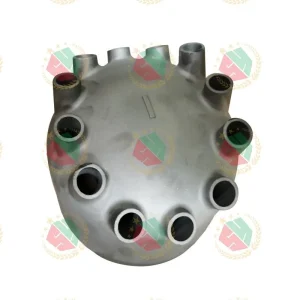
Unlike nozzles machined directly from solid bar stock, cast denitrification nozzles support complex internal flow channels, multiple spray ports and integrated mounting structures that are difficult or costly to produce by solid stock machining.
The operating environment for flue gas denitration nozzles creates combined degradation mechanisms that shorten service life:
- Continuous or fluctuating high-temperature exposure inside boiler and ductwork;
- Chemical corrosion from ammonia, ammonium bisulfate and acidic flue gas byproducts;
- Solid particle erosion caused by fly ash carried within the flue gas;
- Repeated thermal cycling that introduces thermal fatigue stress at thin-walled sections and around nozzle orifices.
This article will not dive deep into SCR or SNCR chemical reaction theory.
All guidance here centers on the casting material, manufacturing quality and inspection of the nozzle casting itself.
Alloy Material Selection for Denitrification Nozzle Castings
Material selection is the most impactful decision for denitrification nozzle service life.
For denitration service, erosion resistance is usually prioritized, followed by high-temperature stability, corrosion resistance and project budget.
The fine spray orifice region is the most common failure location for cast nozzles.
Selection principles for denitration nozzle alloys
When evaluating casting alloys for denitrification nozzles, match the alloy grade to the dominant failure mode in your flue gas environment:
- Heavy fly ash loading: prioritize wear-resistant cobalt or hardfacing alloys;
- High ammonium bisulfate and acidic condensate risk: prioritize nickel-molybdenum corrosion-resistant alloys;
- Stable, moderately high temperature with clean flue gas: use heat-resistant stainless steel for cost control.
Common casting alloy grades & application boundaries
Each alloy grade carries clear strengths and limitations for flue gas denitration applications:
- 310S stainless steel casting: suitable for moderate temperature, relatively clean flue gas and low fly ash concentration; limited erosion resistance under heavy ash impact.
- Duplex 2205 / 2507: delivers good resistance to chloride and acidic corrosion, but has a lower continuous service temperature range compared with nickel-based heat-resistant alloys.
- Hastelloy C276: preferred when ammonium bisulfate corrosion and acidic flue gas are the primary risk factor; performs well in harsh corrosive denitration environments.
- Stellite 6 (cobalt alloy): excellent resistance to particle erosion; the top choice for sites with high fly ash content, though it comes at a premium material and machining cost.
- Inconel 625: suitable for heavy-duty coal-fired power plant conditions where high temperature, corrosion and fly ash erosion act together.
Material comparison table for cast denitrification nozzles
Note: Temperatures shown refer to continuous long-term service temperature only. Transient peak temperatures can exceed these values. For general reference only. Final material validation should be confirmed with flue gas composition data from your site and alloy mill datasheets.
| Alloy Grade | Max Continuous Service Temp | Corrosion Resistance | Erosion Resistance | Typical Denitration Scenario | Relative Cost |
| 310S Stainless Steel | 1050 °C | Moderate | Low | Clean flue gas, low fly ash | Low |
| Duplex 2507 | 315 °C | High | Moderate | Mid-temperature acidic flue gas | Medium |
| Hastelloy C276 | 1040 °C | Very High | Moderate-High | Ammonium bisulfate corrosion risk | High |
| Stellite 6 | 815 °C | Moderate | Very High | Heavy fly ash erosion | Very High |
| Inconel 625 | 980 °C | Very High | High | Combined high temp, corrosion & erosion | Very High |
Casting Process for Denitrification Nozzle Components
Preferred casting route: Investment casting (lost wax casting)
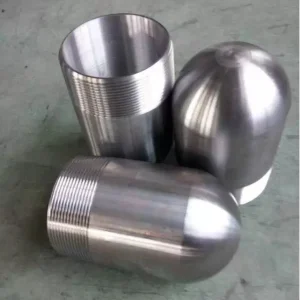
Investment casting, also known as lost wax casting, is the dominant manufacturing route for high-performance denitrification nozzle castings.
This process is well suited for these parts for several reasons:
- It reproduces intricate internal flow passages, thin walls and small precision spray orifice features with high dimensional consistency;
- It produces a smooth as-cast surface, reducing the amount of stock removal required in later CNC machining.
Sand casting is generally not recommended for precision denitrification nozzles with complex internal passages or critical spray tolerances.
It may be considered only for simple, low-duty nozzles with loose performance requirements.
Coarse surface finish, higher risk of core shift and internal porosity near narrow flow passages make sand castings less reliable for most denitration applications.
Foundry quality control points
Foundry process controls directly determine whether a nozzle casting will survive field operation:
- Shielded melting atmosphere to avoid oxidation and element loss in high-alloy melts;
- Proper molten metal filtration to trap slag particles before filling the mold cavity;
- Custom gating and riser layout designed specifically for nozzle geometry, to target shrinkage defects away from spray orifices;
- Refractory shell material selection compatible with reactive nickel and cobalt alloy melts.
Critical casting defects & failure risks for denitrification nozzles
Certain casting defects create severe reliability issues for denitrification nozzles, even if the part passes basic visual inspection:
- Shrinkage porosity near the spray orifice: can cause uneven atomization, internal leakage and accelerated localized erosion;
- Slag inclusion: creates initiation points for crack propagation under thermal cycling;
- Hot tearing: often occurs at section transitions and thin nozzle walls under high alloy solidification stress;
- Core shift: changes orifice position, spray angle and flow distribution of the finished nozzle.
Preventive measures include mold simulation, controlled cooling rates and core support design during wax pattern assembly.
CNC Machining, Inspection & Acceptance Notes
Casting delivers the near-net-shape blank, but the critical functional surfaces of a denitrification nozzle rely on precision post-processing.
Machining focus for nozzle orifice and sealing surfaces
The spray orifice bore, sealing faces, threaded connections and mounting interfaces require tight tolerance CNC machining.
The final orifice geometry directly controls spray angle, droplet size and flow rate.
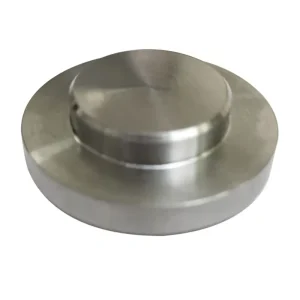
Nickel-based and cobalt-based alloys are difficult to machine.
Shops producing denitrification nozzle castings need to select appropriate tooling, cutting parameters and coolant strategies to avoid work hardening, surface tearing and dimensional drift.
Mandatory NDT & acceptance tests
Standard acceptance inspection for critical denitrification nozzle castings usually includes:
- PT penetrant testing to detect surface cracks, hot tears and exposed porosity;
- UT ultrasonic inspection for subsurface shrinkage or inclusions in thick sections;
- Hydrostatic leak testing to verify that internal flow channels have no through-leakage;
- CMM dimensional inspection to confirm orifice size, spray angle and mounting dimensions match drawings.
Post-treatment options
Passivation is commonly applied to stainless steel and nickel alloy nozzles to improve surface corrosion resistance.
Stabilizing heat treatment may be specified to reduce residual casting stress before installation.
Hardfacing can be considered for additional wear protection in extreme ash erosion environments.
Common Application Scenarios of Cast Denitrification Nozzles
Cast denitrification nozzles are widely deployed across stationary flue gas treatment facilities:
- Coal-fired power plant SCR and SNCR denitration systems;
- Cement kiln flue gas denitration units;
- Waste-to-energy and biomass combustion boilers;
- Industrial furnace and incinerator flue gas treatment projects.
You can find our custom cast denitrification nozzles on our dedicated product page.
For more background on similar component manufacturing, you can review our guide for high-temperature alloy castings.
FAQ
Can I use standard 316L cast nozzles for heavy-duty denitrification?
Generally no. 316L has limited high-temperature strength and poor resistance to ammonium bisulfate and fly ash erosion.
It is unsuitable for nearly all heavy-duty denitration environments. It may only be acceptable in extremely low-temperature, clean flue gas non-critical denitration loops.
Is investment casting always required for denitrification nozzles?
For custom nozzles with complex internal passages or multi-port spray designs, investment casting is strongly preferred.
Simple single-orifice nozzles may sometimes be machined from bar stock, but that falls outside the scope of this casting guide.
What is the most frequent failure mode of denitrification nozzle castings?
Localized erosion of the spray orifice edge, followed by corrosion-fatigue cracking starting from hidden casting porosity or inclusion defects.
Can stellite alloy nozzles be repaired after erosion?
Minor erosion damage can sometimes be repaired by hardfacing reclamation, but repair feasibility depends on the remaining wall thickness and the location of wear.
Heavily eroded or cracked nozzle castings usually require replacement.











