Leveler shaft rollers and rollformer spare parts rarely fail for a single, obvious reason. In continuous galvanizing lines, a roller that looks perfectly serviceable on the drawing can wear out in weeks—or trigger a line stoppage when a bearing seizes and the roll drops from its housing. The difference between a roller that lasts and one that becomes a maintenance headache usually comes down to two decisions made long before the part reaches the line: how the failure mode was diagnosed, and whether the material and surface treatment actually match the working conditions.
This guide examines the dominant failure mechanisms in leveler and rollformer rolls, the material and hardening choices that address them, and the geometric requirements that determine whether a new spare part performs as intended or becomes the next repeat failure.
Why Leveler Shaft Rollers Fail in Galvanizing Lines
The first step in specifying a replacement roller is understanding what actually failed. In galvanizing line tension levelers, two failure paths dominate, and they require different solutions.
Roll surface wear and spalling. The work roll contacts the strip under tension and bending force. When strip shape is poor—edge waves, center buckles, or weld seams—the roll surface absorbs concentrated impact and abrasive contact. Research on tension leveler work rolls identifies abrasive wear as the primary wear mechanism, with hot-rolled strip shape defects cited as the main cause of abnormal roll wear. Scales and foreign matter caught between work rolls and backup rolls compound the problem, producing roughness and surface damage that transfers to the strip. In severe cases, roll marks or subsurface defects can propagate into spalling events, even under the relatively low rolling forces typical of galvanizing levelers.
Roll-end bearing failure and roll drop. A failure mode specific to tension leveler bending units deserves separate attention. Research into continuous galvanizing lines shows that axial forces acting on the work roll’s end support bearings cause progressive wear. Once one side’s bearing wears sufficiently, the opposite bearing can escape its support sleeve—resulting in the roll dropping from the housing, scratching the strip, and potentially causing a line break. This is not a roll body problem. It is a system-level issue involving bearing selection, assembly quality, and axial load control. Replacing the roller without addressing the bearing and alignment conditions will not prevent recurrence.
The practical implication is straightforward: before ordering a replacement leveler shaft roller, confirm whether the failed part shows surface-dominated wear or bearing-interface damage. The former points toward material and hardness upgrades; the latter requires a review of the surrounding assembly.
Material Selection for Leveler and Rollformer Rolls
Material choice for leveler and rollformer rolls is a balance between surface wear resistance and core toughness. A through-hardened alloy with high carbon and chromium content resists abrasion but may become brittle under bending loads. A lower-alloy steel with good core strength may wear too quickly on the surface. The correct choice depends on which failure mode dominates.
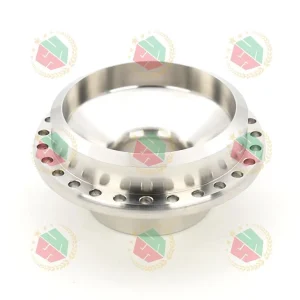
High-carbon chromium steels such as GCr15-type grades are common in roll applications where abrasive wear is the primary concern. They respond well to hardening and can achieve surface hardness in the HRC 58–62 range, making them suitable for work rolls that contact strip with scale or oxide contamination. In rollformer forming stations, similar grades appear as roller materials, often with hard chrome plating for additional surface protection.
Alloy tool steels such as 9Cr2Mo and 60CrMoV-type grades offer a different balance. They provide adequate wear resistance with better core toughness than high-carbon chromium grades, making them preferable where bending loads are significant and the roll must resist deflection without cracking. For leveler applications where the roll diameter is limited by housing geometry, this toughness margin matters.
Cobalt-based alloys enter the picture when working temperatures or chemical exposure exceed what iron-based alloys can tolerate. Standard 42CrMo4 rollers have been observed to crack in sulfide-rich environments, while AMS 5387 cobalt alloy resists galling at elevated temperatures and maintains a fine surface finish after grinding. This does not mean cobalt alloys are the default upgrade for every galvanizing line roller. They are a targeted solution for conditions where thermal cycling or corrosive media degrade conventional steels more rapidly than mechanical wear alone would predict.
Rollformer forming rolls operate under different priorities. Bending and forming loads dominate, and galvanizing-line thermal exposure is absent. Industry equipment specifications commonly list GCr15 or AISI 1045 steel for forming rolls, with hardness in the HRC 58–62 range and optional chrome plating. The critical requirement for rollformer rolls is profile consistency and dimensional accuracy across the roll set, not elevated-temperature performance.
Surface Hardening and Treatment Options
Once the base material is selected, surface treatment determines how long the roll resists wear before reaching its replacement limit.
Induction hardening remains the standard approach for leveler work rolls. The goal is a hard surface layer (typically HRC 58–63) supported by a tougher core. Hardening depth requires judgment: too shallow and the case wears through or spalls under load; too deep and residual stress or brittleness increases. As a general engineering guideline, the effective case depth is often kept within 5% to 10% of the roll body diameter, but specific depth recommendations should come from the roll manufacturer based on application data, not from a generic table.
Hard chrome plating serves two purposes in leveler and rollformer rolls. It provides a low-friction surface that reduces adhesive wear and material pickup, and it offers corrosion protection in environments where zinc splash or moisture is present. Tension leveler work rolls are commercially available with high-hardness chrome plating at thicknesses around 65 μm, paired with surface roughness specifications. For rollformer rolls operating on galvanized or pre-painted strip, chrome coating of approximately 0.05 mm is a common specification.
Surface finish control is inseparable from hardening and coating. A hardened but roughly ground surface will still pick up scale and wear prematurely. Conversely, an excessively smooth surface can reduce strip traction in certain leveling or forming passes. The appropriate roughness depends on the process: work rolls contacting strip typically specify finer finishes, while backup rolls or guide rolls may tolerate rougher surfaces. Commercial tension leveler work rolls list surface roughness as fine as Ra 0.2 μm or below for certain applications, but this should not be treated as a universal target.
Tolerance and Surface Requirements That Affect Roll Life
The geometric quality of a leveler shaft roller affects not only strip flatness but also bearing life and the roll’s own wear pattern.
Roundness and cylindricity directly influence how load distributes across the bearing and the strip width. A roll with poor roundness will impose cyclic radial loads on its bearings with every revolution, accelerating fatigue. Commercial work rolls for tension levelers are offered with roundness tolerances as tight as 0.010 mm or below, and cylindricity tolerances in the 0.005–0.01 mm range. These figures represent precision-ground products, not general machining capability, and should be specified only when the application justifies the cost.
Circular runout affects vibration and strip tracking. A roll that runs out of true will produce periodic thickness variation or surface marking. The same commercial specifications list circular runout tolerances of 0.010–0.018 mm.
Diameter consistency across a roll set is a frequently overlooked requirement. In a leveler or rollformer, multiple rolls work in sequence. If replacement rolls vary in diameter from the original set, the gap settings and inter-roll relationships change, affecting both the process result and the load distribution among rolls. This is a system-level tolerance, not a single-part tolerance, and it should be addressed in the purchase specification.
Surface roughness requires matching to the application rather than minimizing. Too rough and the roll marks the strip; too smooth and strip traction may be insufficient in certain passes. For galvanizing line leveler work rolls, the appropriate range depends on strip thickness, tension, and whether the roll is a work roll or a backup roll.
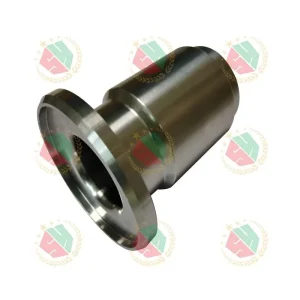
Rollformer Shaft Rollers and Forming Rolls: Different Duty, Different Priorities
Rollformer shaft rollers and forming rolls share the “roller” name with leveler components, but their working conditions and specification priorities diverge in important ways.
Leveler rolls in galvanizing lines contend with elevated temperatures, zinc contamination, and the need to crush scale while bending strip. Rollformer forming rolls, by contrast, shape strip through a sequence of stations at ambient temperature. Their dominant failure modes are abrasive wear from the strip surface and fatigue from repeated bending cycles, not thermal degradation or zinc corrosion.
This difference shifts the material and treatment emphasis. Rollformer forming rolls commonly use GCr15 or AISI 1045 steel with hardening to HRC 58–62 and optional hard chrome. Shafts in rollforming equipment are often specified as 40Cr or AISI 1045 steel with tempering treatment, reflecting the need for torsional strength and fatigue resistance rather than surface wear resistance alone.
For rollformer rolls, profile accuracy and set consistency carry more weight than elevated-temperature alloy selection. A rollformer that produces an out-of-tolerance profile because a replacement roll was machined to a slightly different contour will generate scrap regardless of how wear-resistant the material is. Specification should prioritize the forming profile dimensions and the dimensional relationship among rolls in the station.
Matching the Solution to the Failure Mode: A Practical Framework
The material and treatment choices above become useful only when connected to the actual failure observed on the line. The following framework organizes the decision process.
If the roll surface shows abrasive wear, scoring, or polishing: The primary need is higher surface hardness with adequate toughness. Consider a hardened high-carbon chromium or alloy tool steel, verify that induction hardening reaches the specified case depth, and review surface finish. If scale or foreign matter is the abrasive source, improving strip cleaning or backup roll condition may be as important as changing the roll material.
If the roll surface shows spalling, pitting, or subsurface cracks: Surface hardness alone will not solve this. Check for subsurface defects in the incoming material, review the hardening process for excessive case depth or inadequate tempering, and examine whether abnormal impact loads (weld seams, strip shape defects) are initiating damage. A tougher core material or a revised hardening specification may be needed.
If the failure is bearing seizure or roll drop: Do not specify a new roller until the bearing condition, axial load, and assembly alignment have been reviewed. The tension leveler literature identifies axial force on end support bearings as the root cause of roll drop incidents. A replacement roller installed into a misaligned housing will fail the same way as the original. Corrective actions include bearing type review (thrust bearings where appropriate), improved assembly procedures, and process parameter adjustments to reduce axial loading.
If strip flatness or surface quality deteriorates without obvious roll wear: Check roll diameter consistency across the set, roundness and runout of individual rolls, and the condition of backup rolls. A geometrically imperfect but unworn roll can still produce unacceptable strip.
Frequently Asked Questions
How does a leveler shaft roller differ from a rollformer shaft roller?
A leveler shaft roller operates under bending tension and often elevated temperature in a leveling or tension leveling line, with wear driven by strip contact and scale. A rollformer shaft roller drives forming rolls that shape strip at ambient temperature, with wear driven by forming loads and profile contact. Material priorities and tolerance requirements differ accordingly.
Can a standard 42CrMo4 roller be upgraded for galvanizing line service?
42CrMo4 can perform adequately in some leveler applications, but it is susceptible to cracking in sulfide-rich environments. Upgrading to a cobalt-based alloy or a more highly alloyed steel may be appropriate where thermal cycling or chemical exposure is a factor. The decision should be based on the failed part’s condition, not on material grade alone.
How often should leveler rolls be replaced?
There is no universal interval. Replacement depends on strip volume, strip quality, roll material, and whether the roll is a work roll or backup roll. Condition-based assessment—measuring surface roughness, checking for spalling, and monitoring strip quality—is more reliable than calendar-based replacement.
What causes a leveler roll to drop from its housing?
Roll drop in tension leveler bending units has been traced to wear of the work roll’s end support bearings under axial force. When one bearing wears, the opposite bearing can escape its support sleeve, allowing the roll to detach. Bearing selection, assembly quality, and axial load control are the relevant corrective areas.
Conclusion: Diagnose the Failure Before Selecting the Material
A harder roller is not always a better roller. In galvanizing line levelers, the part that fails may be the roll surface, the bearing interface, or the assembly alignment—and each requires a different response. Material upgrades and surface hardening can extend life significantly when abrasive wear is the dominant mechanism. They will not fix a misaligned housing or an axial load problem that destroys bearings.
For rollformer spare parts, the priorities shift toward profile accuracy, set consistency, and fatigue resistance, with less emphasis on thermal and corrosion resistance. Specifying both types of rolls from the same material logic ignores the different duty each performs.
The most reliable approach is to examine the failed part, identify whether wear, spalling, bearing damage, or geometric drift is the primary issue, and specify material and treatment to address that specific mechanism. Suppliers who understand the application can contribute to this diagnosis; a purchase order alone cannot.











