N08028 is not a grade you specify casually. For engineers and procurement teams sourcing N08028 special stainless steel parts, the material’s corrosion resistance is only half the story. It sits in the high-alloy austenitic family, designed for environments where 316L would fail—concentrated acids, chloride-rich process streams, and sour gas conditions. The other half of the story is whether the part can be machined to drawing, heat-treated correctly, and verified before it enters service. This article connects the material’s composition and properties to the practical realities of manufacturing and sourcing N08028 components.
What Is N08028 Stainless Steel?
N08028 is a high-alloy austenitic stainless steel identified by UNS number N08028 and European designation 1.4563 (X1NiCrMoCu 31-27-4). It is also marketed under commercial names including Sanicro 28, Alloy 28, and Incoloy 028. The grade was developed for service in highly corrosive media, particularly phosphoric acid processing, and has since been adopted in chemical processing, oil and gas, and pollution control equipment.
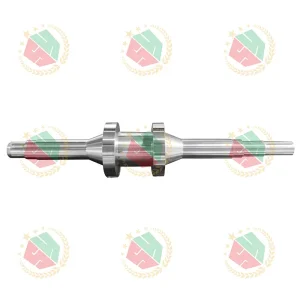
The alloy is characterized by a high nickel content (approximately 31%), high chromium (approximately 27%), and additions of molybdenum and copper. This combination distinguishes it from standard austenitic grades: it is not a modified 316L or a “super austenitic” in the generic sense, but a specific composition engineered for resistance to both oxidizing and reducing acids, with copper playing a key role in sulfuric acid service.
For procurement and drawing specifications, the material should be identified by its UNS or EN number rather than commercial names alone. ASTM B668 covers UNS N08028 and N08029 seamless pipe and tube for general corrosive service, requiring solution-annealed condition and specifying chemical, tensile, and hydrostatic testing requirements.
Chemical Composition and Key Properties
The nominal composition of N08028 (UNS N08028 / EN 1.4563) is approximately: chromium 27%, nickel 31%, molybdenum 3.5%, copper 1.0%, with carbon limited to ≤0.020%. The low carbon content (ELC grade) minimizes sensitization risk during welding and elevated-temperature exposure.
The pitting resistance equivalent number (PRE) for N08028 is typically reported with a minimum of 38, calculated by the standard formula PRE = %Cr + 3.3 × %Mo + 16 × %N. Third-party sources report PRE values in the range of approximately 38–41, depending on product form and calculation basis. This places N08028 well above 316L (PRE typically ~25–28) and in the range of super austenitic grades, though it is not directly interchangeable with higher-molybdenum grades such as 6Mo alloys.
Mechanical properties for solution-annealed bar stock are specified at a minimum yield strength (Rp0.2) of 220 MPa, tensile strength 550–750 MPa, and elongation ≥35%. Hardness is typically ≤220 HB. The austenitic microstructure provides good impact toughness even at cryogenic temperatures.
Table: Nominal composition and key properties of N08028 (reference values)
| Parameter |
Value |
| Cr / Ni / Mo / Cu |
~27% / ~31% / ~3.5% / ~1.0% |
| Carbon (max) |
0.020% |
| PRE (typical range) |
~38–41 (calculation-dependent) |
| Rp0.2 (solution annealed) |
≥220 MPa |
| Rm |
550–750 MPa |
| Elongation |
≥35% |
Sources: Alleima datasheet for Sanicro 28. Values are nominal and should be confirmed against the specific product form and supplier certification.
How N08028 Compares with Common Stainless Steels
The comparison with 304 and 316L is the one most readers will make, and the differences are structural, not marginal.
| Grade |
Cr |
Ni |
Mo |
Cu |
PRE (typical) |
| 304 |
~18% |
~8% |
— |
— |
~18–20 |
| 316L |
~16–18% |
~10–14% |
~2–3% |
— |
~25–28 |
| N08028 |
~27% |
~31% |
~3.5% |
~1.0% |
≥38 |
PRE values are indicative ranges that vary with specific composition and calculation method.
The nickel content of N08028 is roughly three to four times that of 304 or 316L. This matters for two reasons. First, high nickel improves resistance to chloride stress corrosion cracking, a failure mode that can occur in 304 and 316L under simultaneous tensile stress and chloride exposure. Second, nickel stabilizes the austenitic structure and contributes to toughness.
The chromium and molybdenum levels provide the pitting and crevice corrosion resistance reflected in the PRE value. Research on superaustenitic stainless steels has confirmed that increasing Cr, Mo, and N content improves corrosion resistance in chloride media, while copper additions specifically enhance resistance in sulfuric acid. This is why N08028 is often selected for phosphoric and sulfuric acid environments where 316L would corrode at unacceptable rates.
The trade-off is cost and machinability. The alloying content that provides corrosion resistance also makes N08028 more expensive per kilogram and more demanding to machine. It is not a general-purpose upgrade from 316L; it is a targeted selection for environments where the corrosion risk justifies the cost premium.
Manufacturing Methods for N08028 Stainless Steel Parts
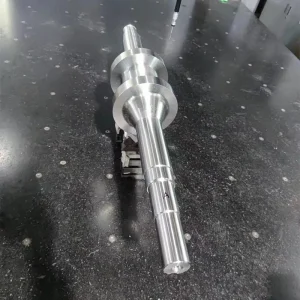
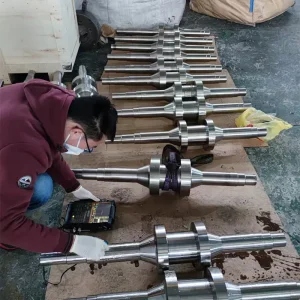
The primary manufacturing path for N08028 special stainless steel parts is CNC machining from bar stock, hollow bar, or forged billet. The material is available in solution-annealed condition as round bar, hollow bar, and seamless tube. For most machined components—pump shafts, valve internals, fittings, and instrument bodies—the workflow is: procure annealed bar or hollow bar to the required diameter, machine to near-net or final shape, and verify dimensions and material condition.
Forging is used for larger or more complex shapes where material utilization and grain structure favor a forged preform over bar stock. N08028 can be hot worked, but the temperature window is narrower than for standard austenitic grades. Non-official industry sources suggest a hot working range of approximately 1050–1200°C with a minimum stopping temperature above 950°C, but this guidance does not appear in the Alleima datasheet reviewed for this article and must be verified directly with the material supplier for any forging operation.
Welding is feasible and N08028 is described as having good weldability, but welded N08028 parts require attention to post-weld condition. Alleima notes that in normal welding operations, heat input to the parent metal occurs for a much shorter time than the interval at which intergranular corrosion becomes a risk, and that the risk of intergranular attack after welding is minimal. However, if the weld or heat-affected zone will be exposed to highly corrosive service, solution annealing after welding may still be specified by the responsible engineer. This article focuses on machined parts; welding should be treated as a specialized operation requiring qualified procedures.
Machining Considerations for N08028 Special Stainless Steel Parts
Machining N08028 presents the classic challenges of high-alloy austenitic stainless steel: rapid work hardening, low thermal conductivity, and a tendency to adhere to cutting tools. The alloy’s high nickel and molybdenum content amplifies these effects compared to 316L.
Work hardening is the most consequential behavior for dimensional control. When the tool rubs rather than cuts—due to insufficient feed, a dull edge, or inadequate depth of cut—the surface layer hardens significantly. The next pass then encounters a harder surface, accelerating tool wear and pushing the operation toward chatter and poor surface finish. The practical implication is that “gentle” machining strategies with light feeds and small depths of cut are counterproductive. The tool must engage the material below the hardened zone from the previous pass.
Thermal management is equally important. N08028’s thermal conductivity is low, so cutting heat concentrates at the tool edge rather than dissipating into the workpiece or chip. Alleima’s official machining guidance for Sanicro 28 recommends reducing cutting speed by approximately 50–55% compared to Sanmac 316/316L when turning with coated cemented carbide tools, while reducing feeds only slightly and with care. This is a material-specific starting point, not a generic recommendation for “stainless steel.” High-pressure coolant directed at the cutting zone helps manage tool life. Tool geometry and grade selection should be matched to the specific operation; a supplier with experience in high-nickel austenitic alloys will have established parameters rather than experimenting on the job.
Surface integrity deserves explicit attention for corrosion-resistant parts. Machining-induced residual stress and microstructural changes can affect the initiation of localized corrosion. While the specific surface integrity response of N08028 to machining is less documented in publicly available sources than for 316L, the general principle applies: a smeared, work-hardened surface is not equivalent to a cleanly cut one when the part will face aggressive chemistry. For critical sealing surfaces or wetted areas, the finishing operation and tool condition should be specified and verified.
Dimensional Accuracy, Tolerances, and Surface Finish
Tolerance and surface finish requirements for N08028 parts should be driven by function, not by the assumption that a “special” material demands uniformly tight tolerances. Over-specification on non-functional features increases cost and scrap risk without improving performance.
For functional surfaces—seal faces, bearing fits, mating diameters—tolerances should reflect the assembly requirements. A pump shaft journal or valve stem may require IT7 or better, while clearance holes and non-mating surfaces can use general tolerances. The machining supplier should confirm capability for the specific feature and material condition rather than being assumed from experience with 316L.
Surface roughness on wetted or sealing surfaces affects both function and corrosion behavior. A rough surface provides more sites for pit initiation and can retain process residues. For sealing faces, Ra values in the range of 0.8–1.6 μm are commonly specified, while non-critical surfaces may accept 3.2 μm or rougher. These are reference ranges for machined stainless steel components generally; the appropriate value depends on the specific sealing method or cleanliness requirement.
One practical note for drawings: if a surface finish or tolerance is specified without a functional justification, the supplier may either decline the work or quote a high price to guarantee compliance. Clear notation of which surfaces are functional and which are general tolerance helps both the supplier and the buyer.
Industrial Applications of N08028 Stainless Steel Components
The applications where N08028 is selected share a common characteristic: the corrosion environment exceeds the capability of 316L, and the part geometry requires machining rather than simple tubular form.
Chemical and petrochemical processing. N08028 is used in phosphoric acid production equipment, sulfuric acid handling, and heat exchanger components. The copper addition specifically improves performance in sulfuric acid environments, while the chromium and molybdenum content addresses oxidizing conditions. Pump components, valve trim, and reactor internals in these services are typical machined parts.
Oil and gas—sour service. In environments containing H₂S, CO₂, and chlorides, N08028 provides resistance to sulfide stress cracking and stress corrosion cracking. Alleima reports that Sanicro 28 is approved under NACE MR0175/ISO 15156 for sulfide stress cracking resistant service in oil field equipment. Downhole tools, coupling stock, and valve components for sour gas wells are application examples. Note that this article addresses machined parts; tubular products are covered by separate specifications.
Seawater and chloride-bearing cooling systems. The high PRE value translates to resistance to pitting and crevice corrosion in chloride-containing waters. Alleima cites practical experience confirming Sanicro 28’s suitability for seawater-carrying piping and seawater-cooled heat exchangers. Components such as pump shafts, fasteners, and valve bodies in marine or brackish water cooling circuits may use N08028 where 316L has shown inadequate life.
Pollution control and flue gas desulfurization. Mixed acid and chloride environments in FGD scrubber systems can exceed the limits of standard stainless steels. N08028 components in damper shafts, spray nozzles, and pump internals are examples of machined parts selected for these conditions.
In each case, the material selection should be validated against the specific chemistry, temperature, and stress state of the application. N08028 is not a universal solution for “corrosive” environments; it is a solution for specific environments where its particular alloy combination is appropriate.
Technical Requirements to Confirm When Sourcing N08028 Parts
A purchase order for N08028 parts that says only “material: N08028” leaves too much to interpretation. The following requirements should be explicitly stated in the inquiry and confirmed in the supplier’s quote and certification.
Material identity and certification. Specify UNS N08028 or EN 1.4563, not a commercial name alone. Require a material test certificate (MTC) per EN 10204 3.1 that reports actual chemical composition and mechanical properties for the heat used. The certificate should show compliance with the relevant product standard (e.g., EN 10088-3 for bar).
Product form and condition. For machined parts, state whether the starting material is bar, hollow bar, or forging. Bar stock should be supplied in solution-annealed condition unless cold-worked properties are intentionally required. Confirm the annealed condition on the certificate.
Heat treatment after machining or welding. If the part will be welded, or if machining induces significant cold work in a critical region, consider whether solution annealing is required. N08028 relies on the correct solution-annealed microstructure for optimal corrosion resistance. The decision should be based on the service environment and the extent of cold work or welding, not applied as a default. Alleima recommends solution annealing at 1100–1160°C followed by water quenching if additional heat treatment is needed after processing.
Inspection and testing. Beyond dimensional inspection, consider whether positive material identification (PMI) is required to verify alloy identity on finished parts. Hardness testing can provide a rough check on heat treatment condition. For critical corrosion service, additional corrosion testing may be specified, though this adds cost and lead time.
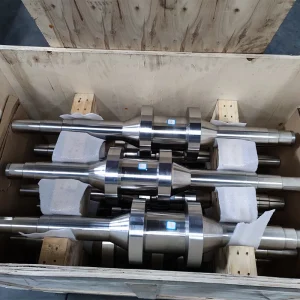
Surface cleanliness. Stainless steel parts should be free of embedded iron contamination from machining or handling. Specify that parts be cleaned and passivated if they will be exposed to corrosive service. Avoid carbon steel brushes, tooling, or fixtures in contact with finished N08028 surfaces.
FAQ
Is N08028 the same as Sanicro 28, Alloy 28, and Incoloy 028?
Yes, these are commercial names for the same alloy composition. UNS N08028 is the standard identifier; EN 1.4563 is the European designation. Specify the UNS or EN number on drawings to avoid ambiguity.
Can N08028 directly replace 316L?
Not as a drop-in substitution without evaluation. N08028 offers significantly higher corrosion resistance in aggressive acids and chloride environments, but it costs more and is more difficult to machine. The substitution should be justified by the specific failure mode or corrosion rate observed with 316L.
Does N08028 require post-weld heat treatment?
Alleima’s datasheet notes that the risk of intergranular attack after welding of Sanicro 28 is minimal under normal welding conditions. However, if the welded component will serve in a highly corrosive environment, solution annealing may still be specified by the engineering function responsible for the equipment. The requirement depends on the service conditions and should be decided case by case.
What is the typical lead time for N08028 machined parts?
Lead time depends on material availability, part complexity, and quantity. This is not a material property question and should be directed to the specific supplier for quotation.











