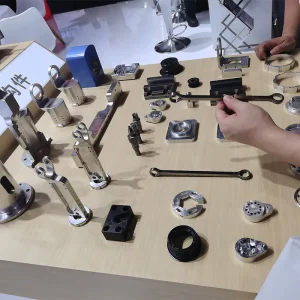
When an engineer specifies an incoloy part for a corrosive line, the choice between Alloy 825 and Alloy 800 is rarely about which alloy is “better.” It is about which alloy matches the actual service conditions. Incoloy 825 (UNS N08825) was designed for reducing acids, chloride-bearing media, and sour gas environments. Incoloy 800 (UNS N08800) was designed for high-temperature strength and oxidation resistance, with corrosion performance in aqueous media as a secondary benefit. Confusing the two can lead to either unnecessary cost or an alloy that does not match the service demands.
This comparison is written for chemical, offshore, and heat exchanger engineers and buyers who need a practical selection framework, not a comprehensive materials handbook. It focuses on the metallurgical logic behind each alloy, the part forms where the choice matters most, and the fabrication and purchasing points that determine whether the specified alloy actually performs in service.
Incoloy 825 vs 800: The Positioning Difference
The simplest way to frame the difference is this: Alloy 825 is corrosion-first; Alloy 800 is heat-first.
Alloy 825 belongs to the Ni-Fe-Cr-Mo-Cu family. Its nickel content sits in the 38–46% range, with deliberate additions of molybdenum (2.5–3.5%) and copper (1.5–3.0%), plus titanium stabilization. This combination was formulated to handle both oxidizing and reducing acids, resist chloride stress corrosion cracking, and tolerate sour service conditions containing H₂S.
Alloy 800 is a Ni-Fe-Cr alloy with roughly 30–35% nickel and 19–23% chromium, but no intentional molybdenum and no copper addition. Its design intent is high-temperature service: oxidation resistance, carburization resistance, and creep strength at temperatures up to approximately 593°C for the base 800 grade, with 800H and 800HT extending that range further. In aqueous corrosive media without severe chloride or reducing acid exposure, 800 performs adequately, but its corrosion resistance is narrower by design.
For an incoloy part in a chemical process line handling sulfuric acid with chlorides, 825 is the appropriate specification. For a furnace support or high-temperature connecting ring, 800 is often the more suitable and more economical choice. The decision should follow the dominant degradation mechanism, not the alloy’s general reputation.
Composition and Corrosion Resistance Mechanisms
What Nickel, Chromium, Molybdenum, and Copper Do
The corrosion resistance of Alloy 825 is not a single-element effect. Each alloying addition addresses a specific failure mode.
Nickel provides the foundation for resistance to chloride stress corrosion cracking (SCC). The 38–46% nickel range in 825 is sufficient to resist chloride-ion SCC in many environments. Alloy 800’s lower nickel content (30–35%) also offers useful SCC resistance in many aqueous media, but the higher nickel in 825 provides a wider margin in severe chloride service.
Chromium forms the passive oxide film that protects against oxidizing media such as nitric acid and oxidizing salts. Both 800 and 825 rely on chromium for this function, and both contain roughly 19–23.5% Cr.
Molybdenum is where the two alloys diverge most clearly. The 2.5–3.5% Mo in 825 enhances resistance to pitting and crevice corrosion, particularly in chloride-bearing environments. Alloy 800 contains no intentional molybdenum addition. This absence is not a defect in 800’s design; it simply reflects that 800 was not formulated for chloride pitting resistance.
Copper, present at 1.5–3.0% in 825, works with molybdenum to resist reducing acids, especially sulfuric and phosphoric acid. Alloy 800 contains no copper addition. In dilute sulfuric acid service, 825’s copper content is a primary reason it is specified where 800 would not be.
Titanium in 825 serves as a stabilizer, tying up carbon to prevent chromium carbide precipitation during welding and reducing sensitization risk. This is why 825 is described as having resistance to intergranular corrosion in the as-welded condition.
What 800’s Lack of Mo and Cu Means in Practice
Alloy 800 should not be dismissed as “less corrosion resistant” in every context. In high-temperature oxidizing atmospheres, 800’s chromium content and nickel balance provide excellent oxidation and carburization resistance, which is why it remains a standard material for reformer and furnace components. The alloy offers general corrosion resistance to many aqueous media and resists stress corrosion cracking in many environments.
The limitation appears when the service environment includes chlorides plus reducing acid, or when pitting and crevice corrosion are credible threats. In those conditions, 800’s lack of molybdenum leaves it vulnerable to localized attack that 825 is designed to resist. Experimental work on preheating sections with high chloride concentration (5,500 ppm Cl⁻) at elevated temperature found that Incoloy 800 exhibited pitting corrosion while Incoloy 825 showed no significant surface corrosion under the same conditions. This type of comparative evidence, while specific to the test environment, illustrates the practical consequence of the compositional difference.
For an incoloy part in a seawater-cooled heat exchanger, this distinction matters. Seawater combines chloride, occasional reducing conditions from biological activity, and crevices at flanges and tube-to-tubesheet joints. Alloy 825’s Mo and Cu content directly address these mechanisms. Alloy 800 does not.
Typical Incoloy Part Forms and Application Scenarios
Washers sit at a particularly unforgiving location in a bolted joint: they are compressed between two surfaces, creating a crevice where oxygen depletion and chloride concentration can accelerate attack. In chloride-bearing service, a washer’s material must resist both general corrosion and crevice corrosion while maintaining preload.
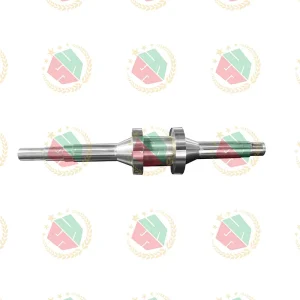
Alloy 825 washers are the appropriate specification for flanged connections in sour gas, seawater, and acid-handling systems. The molybdenum content provides pitting and crevice corrosion resistance that 800 cannot match. For high-temperature flue gas or furnace applications where chlorides are absent and thermal stability is the priority, 800 washers can be considered.
One practical note from machining experience: Incoloy alloys work-harden during turning and threading, and the work-hardening rate for 825 is relatively high even though it is somewhat lower than common austenitic stainless steels. Thin washers below roughly 1.5 mm can distort during heat treatment unless supported by proper fixturing. Thread rolling rather than tapping is often preferred for threaded washer designs in chloride service, because tapping can introduce subsurface shear damage that becomes an initiation site for stress corrosion cracking. Verification note: This fabrication guidance reflects general machining practice for Incoloy alloys; specific parameters should be confirmed with the actual manufacturer.
Incoloy Tube and Heat Exchanger Parts
ASTM B423 / ASME SB423 covers seamless and cold-worked tube in UNS N08825 for general corrosive service. In heat exchanger tubing, the selection between 825 and 800 typically follows the shell-side or tube-side chemistry.
If the tube side carries cooling water with chlorides, or the process fluid contains reducing acids, 825 tube provides the Mo and Cu contribution needed to resist pitting and acid attack. If the application is a high-temperature reformer or pyrolysis furnace where metal temperatures exceed 600°C and the environment is essentially dry or oxidizing, 800H or 800HT tube is the conventional choice.
A mid-range scenario deserves attention: heat exchangers with process temperatures around 400–500°C and moderate chloride levels. Neither alloy is a universal answer here. The decision should turn on whether the chloride concentration and crevice geometry create a credible SCC or pitting risk. If yes, 825’s higher nickel and molybdenum content provide a wider safety margin.
Valve Trim and Machined Components
Valve internals experience erosion-corrosion, crevice attack at sealing surfaces, and in sour service, sulfide stress cracking. Alloy 825 trim is used in acid and sour gas letdown service where the combination of Mo for pitting resistance and Ni for SCC resistance is relevant. Alloy 800 is less common in wet corrosive valve service but appears in high-temperature flue gas and furnace valve applications.
Verification note: The product range available from the website should be confirmed before implying availability of valve trim or other machined Incoloy parts beyond washers. If the site’s current offering is focused on washers, this section should be read as application context rather than a product claim.
Selection Decision Table: By Medium and Temperature
The following table condenses the selection logic into conditions commonly encountered by incoloy part buyers. It assumes the part is a solid or machined component (washer, tube, fitting, trim) and that the primary concern is aqueous corrosion unless otherwise noted.
| Service Condition |
Recommended Alloy |
Rationale |
| Sulfuric acid (reducing), with chlorides, >60°C |
825 |
Cu + Mo resist reducing acid; Ni resists chloride SCC |
| Phosphoric acid, contaminated with chlorides |
825 |
Cu addition targets phosphoric acid; Mo resists pitting |
| Seawater or brine, stagnant or creviced |
825 |
Mo provides pitting/crevice resistance; 800 lacks Mo |
| Sour gas (H₂S) with chlorides, cracking risk per NACE MR0175 scope |
825 |
Listed in NACE MR0175 for sour service cracking resistance; Ni + Mo combination |
| Oxidizing acid (nitric), no chlorides, moderate temp |
800 or 825 |
Both rely on Cr passive film; 800 is lower cost |
| High-temperature oxidation/carburization, >600°C, dry |
800 / 800H / 800HT |
High-temperature strength and stability; 825 not intended for this range |
| Dilute chloride, low temperature, no crevice |
800 may suffice |
800’s Ni content provides SCC resistance in mild conditions; pitting risk is low without crevices |
Important boundary on NACE MR0175: This standard addresses resistance to sulfide stress cracking and defines materials acceptable for H₂S-containing service. It does not establish pitting or crevice corrosion limits. A material listed in MR0175 is not automatically “fully corrosion resistant” for all sour conditions; it means the material meets the cracking resistance requirements within the standard’s defined scope. For 825 in sour brine with high chloride, pitting resistance still depends on the Mo content and the actual temperature and chloride concentration. In high-chloride sour service, MR0175 compliance is a starting point, not a complete corrosion assessment.
Fabrication and Purchasing Considerations
Work Hardening and Machining
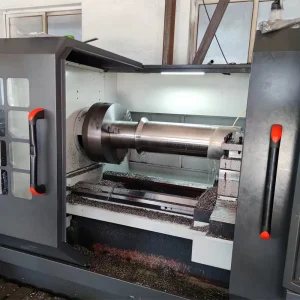
Alloy 825 and 800 both work-harden more rapidly than austenitic stainless steels. For 825 specifically, the work-hardening rate is somewhat lower than common austenitic stainless grades but still relatively high, and forming equipment must be adequately powered to compensate for yield strength increase during deformation. In machining operations, dwelling or rubbing the tool against the surface hardens the cut layer and accelerates tool wear. For an incoloy part with tight tolerances, such as a washer with flatness requirements or a threaded fitting, the machining sequence and tool path should avoid unnecessary passes that work the surface.
This is not a theoretical concern for thin parts. Washers below 1.5 mm thickness can distort during solution annealing or final heat treatment if not properly supported. Large-diameter washers may require controlled cooling rates to avoid edge warping. These are fabrication details that should be discussed at the quotation stage, not discovered during first article inspection.
Surface Finish and Its Effect on Corrosion Resistance
Pitting and crevice corrosion initiate at surface discontinuities: scratches, embedded iron, heat tint from welding, and rough machined surfaces. For 825 parts in chloride service, the surface condition of sealing faces and crevice-forming surfaces directly affects service life.
A machined finish of Ra ≤ 0.8 µm is typical for general corrosion-resistant surfaces. Electropolishing to Ra ≤ 0.2 µm may be specified for critical sealing surfaces in pharmaceutical or high-purity chemical service, where both corrosion resistance and cleanability are required. For washers in seawater or sour service, removing heat tint and ensuring a clean, passive surface after machining is more important than achieving an ultra-low Ra number.
Standard and Certification Checks
When purchasing an incoloy part, the material certificate should be verified against the specified UNS number and applicable standard:
- Alloy 825: UNS N08825. Tube and pipe may be specified to ASTM B423 / ASME SB423. Bar and forged forms fall under different specifications depending on product form. NACE MR0175 compliance should be explicitly stated on the certificate if sour service is required.
- Alloy 800: UNS N08800 (or N08810/N08811 for 800H/800HT). Product standards vary by form; bar stock, plate, and forgings each have separate ASTM coverage.
The website’s existing Incoloy washer product page indicates capability in machining Incoloy washers to specified tolerances and surface finishes. For other part forms, such as tube or custom machined components, the available manufacturing scope should be confirmed directly rather than assumed from the washer page.
FAQ
Is Incoloy 825 always the better choice for corrosive service compared to 800?
No. Alloy 825 is the better choice when the service involves chlorides, reducing acids, or sour gas, because its Mo and Cu additions target those mechanisms. Alloy 800 is better suited and more economical for high-temperature oxidizing or carburizing environments where corrosion is driven by heat rather than aqueous chemistry. Using 825 in a high-temperature furnace application would add cost without adding performance.
Can Incoloy 800 washers be used in seawater flanges?
Not recommended. Seawater creates crevice conditions at the washer faces and chloride levels that promote pitting. Alloy 800 contains no intentional molybdenum addition, which is the primary alloying element for pitting resistance in chloride media. Alloy 825 washers provide the Mo content needed for this service.
What does NACE MR0175 approval actually mean for an Incoloy 825 part?
It means the material meets the standard’s requirements for resistance to sulfide stress cracking in H₂S-containing environments within the defined scope of the standard. It does not certify resistance to pitting, crevice corrosion, or general weight-loss corrosion. A part can be MR0175 compliant and still suffer pitting in high-chloride sour brine if the Mo content and surface condition are not appropriate for the specific conditions.
Does ASTM B423 cover Incoloy 825 washers?
No. ASTM B423 covers seamless pipe and tube in UNS N08825. Washers and other machined forms are typically purchased against a material certificate showing the UNS number and chemistry rather than a product-form standard for washers. The certificate should confirm N08825 chemistry and any required NACE compliance.
Why does surface finish matter for an Incoloy part in chloride service?
Pits initiate at surface defects where chlorides concentrate and oxygen availability differs from the bulk environment. A rough machined surface, heat tint, or embedded foreign particles create initiation sites. For 825 in seawater or sour brine, specifying a clean, properly passivated surface on sealing and crevice-facing surfaces is a practical way to support the alloy’s inherent corrosion resistance.
Matching the Alloy to the Service
The choice between Incoloy 825 and 800 for an incoloy part should follow the dominant degradation mechanism in the actual service environment. If chlorides, reducing acids, or H₂S are present and the part will operate in an aqueous or wet environment, 825’s molybdenum, copper, and nickel content address those specific threats. If the application is high-temperature oxidation, carburization, or dry furnace service, 800 or its higher-strength variants are the appropriate family.
For washers and machined components in corrosive service, the selection decision should also account for crevice geometry, surface finish, and the fabrication details that determine whether the specified alloy performs as intended. A certified 825 washer with poor surface finish can fail in chloride service just as a properly finished 800 washer cannot substitute for 825 where molybdenum is needed.
To review available Incoloy washer specifications, including material grades, tolerances, and surface finish options, visit the Incoloy washer product page. For part forms beyond washers, confirm the current manufacturing scope directly before specifying.