When an engineer lists an inconel part for a demanding application, Alloy 625 and Alloy 718 often appear on the same shortlist. Both are nickel-based superalloys with excellent high-temperature stability. Both resist oxidation. Both are available in bar, plate, and cast forms. Yet they are engineered for fundamentally different failure modes, and choosing the wrong one can lead to either premature corrosion or an over-designed component that adds cost without adding service life.
The distinction is not about which alloy is “stronger” or “more corrosion resistant” in a general sense. It is about which strengthening mechanism matches the dominant degradation threat. Inconel 625 relies on solid solution strengthening for its corrosion resistance and broad temperature stability. Inconel 718 uses precipitation hardening to achieve very high strength, but that strength has a temperature ceiling. Understanding where that ceiling sits, and what happens beyond it, is the starting point for every inconel part selection decision.
This article is written for aerospace, petrochemical, and high-temperature equipment engineers and buyers who need a working selection framework. It focuses on the metallurgical logic behind each alloy, the service conditions that favor one over the other, and the fabrication considerations that determine whether the specified alloy performs as intended.
The Core Difference: Solid Solution Strengthening vs Precipitation Hardening
The simplest way to frame the difference is this: Inconel 625 gets its strength from what is dissolved in it; Inconel 718 gets its strength from what precipitates out of it.
Inconel 625 (UNS N06625) is a solid-solution strengthened alloy. Molybdenum (8–10%) and niobium (3.15–4.15%) remain dissolved in the nickel-chromium matrix, distorting the crystal lattice and impeding dislocation movement. This strengthening is present in the as-supplied condition. No aging treatment is required. The same compositional features that provide strength—particularly the high molybdenum and chromium content—also produce the alloy’s exceptional corrosion resistance. Inconel 625 is, in effect, a corrosion alloy that happens to have useful strength, rather than a strength alloy that happens to resist corrosion.
Inconel 718 (UNS N07718) works by a different principle. Niobium (4.75–5.5%) combines with nickel during aging to form gamma double prime (Ni₃Nb) precipitates, working alongside gamma prime (Ni₃Al/Ti) to provide the primary strengthening effect. In the solution-treated condition, 718 is relatively soft. After aging, its yield strength reaches approximately 1000–1100 MPa depending on product form and specification, compared with typically 320–450 MPa for annealed 625. That difference—roughly two to three times the yield strength—explains why 718 dominates high-stress rotating components.
Inconel 600, sometimes grouped with these alloys in general nickel-alloy discussions, is a Ni-Cr alloy without the molybdenum or niobium additions that define 625 and 718. Its strengthening and corrosion resistance are both more modest, and it sits outside the scope of this comparison.
For an inconel part where the primary threat is chloride pitting or acidic attack, 625’s solid-solution chemistry is the relevant advantage. Where the primary threat is fatigue or yield under high load at moderate temperature, 718’s precipitation-hardened structure is the appropriate choice. The rest of this article examines where those conditions actually occur.
How Temperature and Corrosion Conditions Decide the Choice
Inconel 625: Corrosion-Dominated Service and Welded Structures
Inconel 625 is the default specification when corrosion resistance is the deciding factor. Its molybdenum content provides pitting and crevice corrosion resistance in chloride-bearing environments, with a pitting resistance equivalent number (PREN) significantly higher than that of 718 due to its higher molybdenum content. In seawater, acidic process streams, and sour gas service, this resistance is the reason 625 is selected rather than a higher-strength alternative. The alloy is used for subsea flowlines, chemical processing equipment including valves and heat exchangers, and marine exhaust systems.
The temperature capability of 625 is often misunderstood. The alloy retains useful strength and oxidation resistance to approximately 980°C, and some sources cite service temperatures up to 1093°C for specific product forms. But “useful strength” at 980°C is not the same as the high load-bearing capacity that 718 provides at lower temperatures. Inconel 625 at high temperature is selected for oxidation resistance and structural stability, not for yield strength under heavy load.
The fabrication advantage of 625 is equally important. The alloy can be used in the as-welded condition without post-weld heat treatment and is resistant to intergranular corrosion even in the welded condition. For welded structures, weld overlay cladding, and complex fabrications where a post-weld aging cycle would introduce distortion or add cost, this simplicity is a practical selection criterion. The alloy is commonly applied as weld overlay on carbon steel for sour service, where the cladding provides corrosion resistance without requiring heat treatment of the entire component.
Inconel 718: Strength-Dominated Service Below the Aging Window
Inconel 718 is the dominant superalloy for high-stress applications below approximately 650°C. Jet engine turbine discs, high-strength fasteners, oil and gas downhole tools, and rocket engine turbopumps all rely on 718’s aged strength. The alloy’s creep and stress-rupture performance is excellent in this range.
Above that temperature, the strengthening mechanism begins to fail. The gamma double prime precipitates that provide 718’s strength coarsen and transform to the delta phase at temperatures around 650°C and above, causing a loss of strength. This is not a gradual decline that can be managed with a safety factor. It is a phase transformation that changes the alloy’s fundamental behavior. For sustained service above approximately 650–700°C, 718 is no longer the appropriate choice on strength grounds, regardless of its room-temperature properties. The exact upper limit depends on stress level and required life, but the mechanism imposes a practical boundary that cannot be designed around indefinitely.
Inconel 718 does have useful corrosion resistance. It resists oxidation and many aqueous media adequately for structural applications. But in aggressive chloride or reducing acid environments, its lower molybdenum content (2.8–3.3%) and higher iron content make it less resistant than 625. An inconel part specified in 718 for a corrosive application is likely over-specified on strength and under-specified on corrosion resistance. The selection logic should follow the dominant failure mode, not a general preference for “higher performance” alloy.
Typical Inconel Part Forms and Where Each Alloy Fits
Valve Bodies and Chemical Processing Components
In chemical processing, valve bodies and internal components face a combination of corrosive media, erosive flow, and sealing-surface demands. When the process stream contains chlorides, reducing acids, or seawater cooling, Inconel 625 is the appropriate specification. Its molybdenum content addresses pitting and crevice corrosion at flanges and sealing faces, and its as-welded usability simplifies fabrication of complex valve geometries.
Inconel 718 appears in chemical service primarily in high-pressure fasteners and structural components where strength is the governing requirement, rather than in wetted parts exposed to aggressive chemistry. For an inconel part that combines both functions—a high-stress component that also contacts corrosive media—the selection may require a compromise or a different alloy entirely.
Verification note: The website’s current product pages cover Inconel 600 and Inconel 718. Availability of Inconel 625 parts should be confirmed before specifying 625 as a supplied material.
Turbine Seals, Discs, and High-Stress Rotating Parts
In aerospace and gas turbine applications, 718 is the default for turbine discs, compressor discs, shafts, and high-stress static components operating below 650°C. The alloy’s combination of high yield strength, fatigue resistance, and stress-rupture capability in this temperature range is difficult to replace. Turbine seals that experience high contact loads and thermal cycling are often specified in 718 when the seal faces are not exposed to severe corrosive attack.
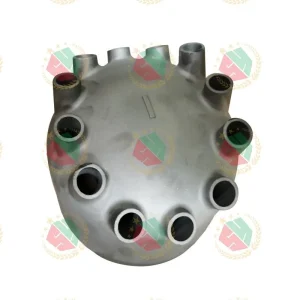
Inconel 625 appears in engine exhaust systems, ducting, and components where oxidation resistance and corrosion resistance are more important than load-bearing capacity. The selection between the two in a turbine environment usually follows a clear question: is the part primarily a structural load path, or primarily a containment and flow-path component? The first favors 718; the second favors 625.
Manifolds, Fasteners, and Exhaust Components
Fasteners are a classic 718 application. High preload, resistance to stress relaxation, and fatigue resistance under cyclic loading are the governing requirements, and 718’s aged strength and stress-rupture performance directly address them. A high-temperature bolted joint specified in 625 would likely require a larger fastener or a lower preload to achieve equivalent performance, adding weight and complexity.
Exhaust manifolds and similar components present a more nuanced case. If the operating temperature remains below 650°C and the environment is oxidizing but not severely corrosive, 718 is a reasonable choice. If the exhaust stream contains chloride-bearing condensates or acidic species, 625’s corrosion resistance may outweigh 718’s strength advantage. The decision should be based on the actual gas chemistry and metal temperature, not on a general assumption that higher strength is always preferable.
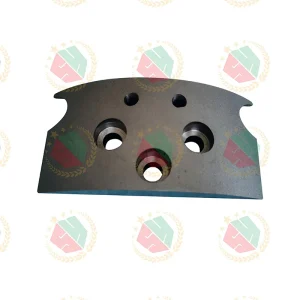
Fabrication and Casting Challenges: 625 vs 718
Machining Behavior
Both alloys are difficult to machine compared with stainless steels, but for different reasons. Inconel 625 in the annealed condition is gummy and work-hardens rapidly. Chips are long and stringy, tool wear is accelerated, and the material tends to push away from the cutting edge rather than shear cleanly. Sharp tooling, high-pressure coolant, and conservative feeds are essential to avoid a hardened surface layer that complicates subsequent operations.
Inconel 718 is typically machined in the solution-treated or partially aged condition, then aged after machining. Its higher absolute hardness means tool wear is a primary concern, but chip formation is more predictable and dimensional control is generally better than with 625. If a part is aged before final machining, the hardness increases further and machining becomes significantly more difficult. The practical approach for most inconel part manufacturing is to rough machine in the softer condition, age, then finish machine with allowances for the dimensional changes that aging produces.
Welding and Post-Weld Treatment
Inconel 625 can be welded and placed into service without post-weld heat treatment, and the alloy resists intergranular corrosion even in the welded condition. This is a genuine fabrication advantage for large or complex assemblies where a post-weld aging cycle would be impractical or would introduce distortion. The alloy is also widely used as a weld overlay for corrosion protection, applied to carbon steel or lower-alloy substrates without requiring heat treatment of the finished component.
Inconel 718 is weldable, but welded components generally require post-weld aging to restore strength in the weld and heat-affected zone. The welding process itself can produce a cast-like microstructure with segregation that affects subsequent aging response. For welded 718 structures, the heat treatment cycle becomes part of the manufacturing critical path, not an optional finishing step.
Casting Considerations
Both alloys can be investment cast, but the process control requirements differ. Inconel 718 contains sufficient niobium that Laves phase can form during solidification. This phase is detrimental to mechanical properties and must be dissolved through solution treatment before aging. Standard heat treatment for cast 718, as described in AMS 5383, involves homogenization followed by solution treatment and a two-step aging cycle. The casting process and heat treatment schedule for 718 must be designed as an integrated system, not as separate operations. Inconel 625 is more forgiving in casting, though segregation control in thick sections remains important.
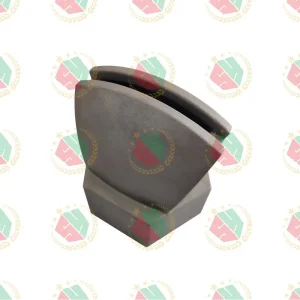
For an inconel part that requires both casting and high strength, 718’s heat treatment is an integral part of achieving the specified properties. A cast 718 component that has not received the correct solution-and-age treatment will not deliver the strength that the alloy designation implies.
Selection Confirmation Checklist
The following checklist is intended for use before quotation or design review, as a way to confirm that the alloy selection matches the dominant service requirement.
| Confirmation Question | If Yes | If No |
| Is the primary failure mode corrosion (pitting, crevice, acidic attack)? | 625 is the appropriate starting point | Proceed to next question |
| Is the sustained service temperature above approximately 650°C? | 625 or a different alloy family; 718 strength advantage is lost | Proceed to next question |
| Does the part require yield strength above approximately 800–900 MPa? | 718 (aged condition) | Proceed to next question |
| Is the component a welded fabrication that cannot be post-weld aged? | 625 | 718 may be considered |
| Are both corrosion and high stress present at moderate temperature? | Requires case-specific assessment; corrosion risk generally favors 625 | — |
The 800–900 MPa threshold in this table is a practical distinction between the typical yield strength of annealed 625 and aged 718. It is not a specification limit. Final material selection should be based on the actual design requirements and applicable standards for the specific inconel part.
FAQ
Is Inconel 718 stronger than 625 at all temperatures?
No. 718’s strength advantage depends on gamma double prime precipitates that remain stable below approximately 650°C. Above that temperature, the precipitates coarsen and transform, and the strength advantage diminishes. Inconel 625’s solid-solution strengthening does not depend on a precipitate phase and remains effective at higher temperatures, though at a lower absolute strength level.
Can Inconel 625 be aged to match 718’s strength?
No. Inconel 625 does not contain the titanium, aluminum, and niobium balance required for a significant precipitation hardening response. Its strength comes from molybdenum and niobium in solid solution, and aging treatment does not produce the gamma double prime precipitates that strengthen 718.
Which alloy is better for seawater applications?
Inconel 625. Its molybdenum content provides pitting and crevice corrosion resistance with a PREN significantly higher than 718, and it is specifically noted for seawater service including piping, fittings, and marine components. Inconel 718 has adequate corrosion resistance for many environments but is not the preferred choice for aggressive chloride service.
Why does Inconel 718 require aging treatment?
In the solution-treated condition, 718’s alloying elements remain largely in solution and the alloy is relatively soft. Aging precipitates gamma double prime (Ni₃Nb), which impedes dislocation movement and produces the high strength for which the alloy is specified. Without aging, a 718 part does not achieve its intended mechanical properties.
Can both alloys be investment cast?
Yes. Both can be produced by investment casting. Inconel 718 casting requires solution treatment to dissolve Laves phase formed during solidification, followed by aging to develop strength. The heat treatment is an essential part of the manufacturing process, not an optional step. Inconel 625 casting is somewhat more forgiving, though segregation control remains important for thick sections.
Next Step: Match the Mechanism to the Failure Mode
The choice between Inconel 625 and 718 for an inconel part should follow a single organizing question: what is the dominant degradation mechanism? If corrosion—pitting, crevice attack, acidic or chloride-bearing media—is the credible threat, 625’s solid-solution chemistry and molybdenum content address it directly, and its as-welded usability simplifies fabrication. If high stress, fatigue, or yield under load below approximately 650°C is the governing requirement, 718’s precipitation-hardened strength is the appropriate specification, provided the temperature ceiling is respected.
For applications where both corrosion and high stress are present, neither alloy is a universal answer. The assessment should weigh the consequences of corrosion failure against the consequences of mechanical failure, and consider whether a different material or a surface protection approach might address both requirements more effectively.
To review available Inconel part specifications, including Inconel 600 and Inconel 718 product information, visit the relevant product pages. For Inconel 625 parts or custom cast and machined components in either alloy, confirm the current manufacturing scope and heat treatment capabilities directly before specifying.











